Saturday, September 17, 2011

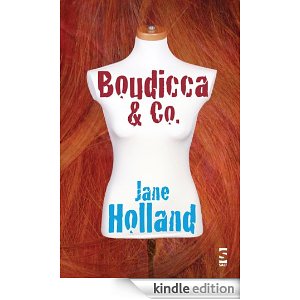
Boudicca & Co relaunches as Kindle edition for just 86p!

'I was dashing from poem to poem, completely compelled.' Helena Nelson, Ambit magazine

Glorious news! 

My second poetry collection, Boudicca & Co, has been launched by Salt Publishing today in a Kindle edition. You don't need a Kindle ereader to buy it, you can download free software from that page for computer or laptop, Mac or PC, and read it on your normal screen.


The paperback is 9.99. The Kindle edition is only 0.86p!


Please help to support poetry on Kindle - still an undiscovered world for most readers - by buying this book for less than a pound, or a dollar if you're in the States, and sharing this link, letting others know that it's now available in a digital edition. 


Many thanks! Below are a few of the reviews and recommendations Boudicca & Co received on first publication in paperback.
*
'Jane Holland's Boudicca & Co is a book of adventurous, resonant inventions. As the title suggests, it offers a new view from the interior - of both country and psyche - in which history and geography are co-opted in effortless interplay. It's a work of synthesis, and of poetic and emotional maturity, in which Holland emerges as a true craftswoman, a supple and graceful thinker with an effortless grasp of line, at the heart of the English lyric tradition.'

Fiona Sampson, Editor of Poetry Review


'I reached the fourth section of the book, the Boudicca sequence, and everything went electric ... There's a touch of Vicki Feaver about the violence and the cool delight in blood and innards, but the work is quite distinctive ... I was dashing from poem to poem, completely compelled.'

Helena Nelson, Ambit 2007


'Extremely powerful and varied ... Holland has both the clarity for the reader and the mastery of language to say what she means in a way that makes the brain tingle with both shock and pleasure ... This collection is outstanding.'

Angela Topping, Stride Magazine


'... we need only compare Holland's work with the anti-war 'poetry' of Harold Pinter to gain some indication of how rich and rewarding her response to modern conflict is - by shifting methods towards the imaginative and narrative elements of poetry, rather than the rhetorical and political. In this sense, the 'Boudicca' sequence has a great deal in common with David Harsent's Legion, which represents a similar attempt by a non-combatant poet to engage intelligently with the realities of war. This is, frankly, an outstanding collection, and Holland, as a result, can now count herself amongst the front rank of contemporary British poets.'

Simon Turner, Gists and Piths, 2007
In her unconventional aspect, Boudicca is peculiarly modern, and there are moments in the sequence, where modern wars and conflicts appear to be invading the ancient story. In ‘'Last Stand'', the woods are ‘'thick / with sniper fire'’ and Romans beat the men with ‘'rifle butts''. By breaking with the historic period of the tale, Holland comments on the repetition of atrocities and war, as if Boudicca is looking forward to the suffering and dehumanisation of twentieth-century wars. 
Zoë Brigley in English Studies
Boudicca & Co. is a bold re-imagining of Britishness. Our contemporary England of Sunday roasts and cyberspace gives way to a wild and alien landscape, a place that Holland lays glinting before us “like a coin tossed in the sun / blunt-edged, foreign.” Steeped in myth and medieval poetry, this is a land of “ruins under rain,” hares, oaks, gargoyles and the Green Man. At the heart of it, embodying both Britain’s fierce beauty and its bloodied past, is Boudicca, and her voice is a startling achievement: modern, pitch-black, funny, and yet hauntingly lyrical. Jane Holland’s second collection is full of love and astonishment, a tribute to the resilience of women, to the power of literature, and, most of all, to: “England // my beleaguered sunken island.”

Poet, Clare Pollard

Friday, September 16, 2011

A Regency Celebration Day with the RNA

Do you love Jane Austen and Georgette Heyer? Do you wish you knew how to play Loo or dance a daring waltz?

Then this event is perfect for you: A Regency Celebration Day, hosted by the Romantic Novelists Association, with a varied list of activities for everyone to enjoy.
The RNA will be holding a Regency Celebration on Saturday 8 October 2011 between 9.00am-6.00pm at the Royal Overseas League, Park Place, off St James’s Street, London SW1A 1LR (near Green Park tube station).

This event will be a celebration of Jane Austen, Georgette Heyer and the books they have influenced.  It coincides with the launch of a new biography of Georgette Heyer, written by Dr Jennifer Kloester, and 2011 also happens to be the bi-centenary of the publication of Jane Austen’s “Sense & Sensibility” – both perfect excuses for a Regency themed day!

The day will be a mixture of serious talks and more frivolous activities, and will include the following:-
Georgette Heyer, Her Life and Writing – Talk by Dr Jennifer Kloester
Sense & Sensibility: The Things You Didn’t Know – Talk by Amanda Grange
Austen & Heyer – Were they better than they thought they were?  Panel discussion
The Celestial Bed: Sex and the Georgians – Talk and panel discussion
Regency Scents: Odours and Malodours – Louise Allen and Christina Courtenay “sniff-and-tell”
Regency Clothing - Jane Walton demonstrates the fashions of the day
Regency Dancing – Mr and Mrs Ellis Rogers take us through the steps
Parlour Games – Learn how to play Whist, Piquet, Vingt et Un or Loo
Regency Walk – Guided tour of St James’s
Afternoon Tea **

(**  Please note, on a first come first served basis, fifty delegates will be able to attend a special afternoon tea at the East India Club in the room where the Prince Regent was given the news of the battle of Waterloo.  For everyone else, there will be afternoon tea at the Royal Overseas League.)

Throughout the day, there will be a book stall and author signings, as well as a chance to chat to authors of historical romance.  There will also be a competition and a quiz, with prizes donated by the authors.

The price for the day, including a sandwich lunch, tea and coffee, is only £55 (although for those of you wanting to attend the Waterloo Tea there is an extra charge of £18).  At lunchtime, there will also be a cash bar available for extra drinks.

It all promises to be a wonderful day, so please spread the word!

If you’d like to join us, please fill out the booking form on our site.  If you have any queries, please e-mail Pia Fenton at pia.fenton AT googlemail.com and you can join us on Facebook on the events page “A Regency Celebration” for regular updates. Authors – please contact Pia for a copy of our Authors’ Information Sheet.

Wednesday, September 14, 2011

Researching Shakespeare in Stratford


I've been in this lovely cottage this week, researching Shakespeare's home life in Stratford upon Avon for the second book in my Tudor trilogy, written under the name Victoria Lamb.

I'm also writing that book at the same time and researching 'on the hoof', as it were, which is the best way to do it with such complicated historicals. It may seem easier to do all the research beforehand and then start writing. But that tends to make people research the spirit out of a book, procrastinate endlessly - just one more trip to the library! - and never begin the writing itself.

It's also a massively inefficient method for a novelist.

This is because you never know precisely what detail you may need until you start writing a scene and hit a snag - what soap would a Tudor lady have used in her bath? (Castille scented soap); how old was Kit Marlowe in the summer of 1586? (he was 22 that year) - at which point you would turn naturally to a book at your elbow or the internet. So I'm both researching and writing this week.  

Although I love being here in Stratford upon Avon, with its quaint narrow streets and distinctive black and white half-timbered houses, my favourite topics for research so far have been the Tudor spy network and the brave new world of London theatres. The theatre in particular is a fascinating area for research, being a popular entertainment that was just beginning to expand in the late 1580s, though still dogged by plagues, repressive laws, and a dearth of good writers.

His Dark Lady - the second book in my Victoria Lamb Tudor trilogy - is due on my editor's desk on October 1st.

There's still quite a mountain to climb, even with the help of this stay in Stratford. Will I make it?
You can also follow my Tudor-writing progress on Twitter, where I am @VictoriaLamb1

Friday, September 09, 2011

'Every woman adores a Fascist'

This is a blog post from earlier this year on the site I run for readers and fans of my mother, Charlotte Lamb. I decided to replicate it here as it's quite a complex piece on the nature of women writing for other women, and in particular doing so in the late seventies, and might be of interest to readers of this blog too.


Festival Summer was first published by Mills & Boon in 1977.

The Magnificent Milfords are one of England's great theatrical families - brilliant, beautiful and witty. All except Katrine, who prefers to stay at home and has no yearnings for the limelight. But this summer, at the Cantwich Festical, she falls under the spell of the brooding, enigmatic actor-director Max Neilson, who soon co-opts her as his PA. But Max has other plans for Katrine beside fetching and carrying ...

This is a very early contemporary Lamb title, written just as she is emerging from several years of writing fairly conservative historicals, and it flags up territory she will revisit in later novels about the stage or actors in general.

Charlotte Lamb had little or no contact with the professional theatre, despite the number of novels where her hero or heroine are actors. Before becoming a writer, she worked for a spell at the BBC, where she came into contact with a number of acting folk, and of course she was a great theatregoer herself while still living in the London area. Lamb's knowledge of Shakespeare was exemplary, and she knew much modern drama too, reading plays even once her many children made it difficult for her to visit the theatre in person. Yet she never showed any personal inclination to write for the stage or to act herself, preferring the solitude of the novelist's life.

In Festival Summer, Max Neilson shows all the hallmarks of a later classic Lamb hero: worldly-wise, cynical, brooding, charismatic, even domineering. The sample text in the inside front cover sums up that kind of hero's bleak outlook on life, and his reliance on the idea of a woman's destiny - which usually turns out to be a place in his bed:

He looked into her upturned face with a menacing smile. "Cowards have to learn that it's easier to fight than to run away because no matter how fast you run fate can run faster."

Katrine provides the pattern for Lamb's younger heroines, the ones who have yet to taste life and whose primary objective is to keep a low profile and hence avoid trouble. They are the emotional 'cowards' Max Neilson refers to above.

Where Festival Summer differs from some of the later Lamb titles following this same model is that Katrine has been suppressing her talent as an actress in order not to compete with her actor father and older siblings, all of whom are depicted as shallow, demanding, egotistical and self-serving - while Katrine herself is humble, modest, patient and a domestic slave. But she's not a doormat. There's an early scene in which she brushes her father aside and sorts out his clothes for him in a slightly brusque manner, making it clear that while she isn't keen on the limelight her siblings enjoy, she does need to feel in control of the household - and of them.

The first kiss appears to come over halfway through the book - too early yet for the infamous Lamb bedroom scenes - and again, sets the pattern for later sexual contact in Lamb novels of this period. Goaded beyond endurance by her stubborn refusal to admit any talent, the hero Max grabs Katrine and kisses her:

Max laughed. "Ordinary? You're as ordinary as dynamite!" He caught her by the shoulders, his fingers biting into her flesh, so that she raised her head, gasping.

'Max! You're hurt ..." The words were smothered beneath his lips as he bent his head and kissed her with violent intensity, so hard that it forced her head back and stretched her throat until it was painful.

Sounds harsh, yes? Yet one sentence later, we get this: 'A sensation of intolerable bliss burst upon her.'

Max Neilson is by no means the brutal, domineering hero of later Lamb novels, who comes along to wake the sleeping princess with a kiss - and likes to make damn sure she's aware of what's going on - but he does appear to be a prototype for that man. Indeed, these archetypal Lamb heroes are disturbingly reminiscent of Sylvia Plath's "Daddy", a visceral proto-feminist poem written about fifteen years earlier than Festival Summer:

Every woman adores a Fascist,
The boot in the face, the brute
Brute heart of a brute like you.

Here, the modest Katrine gets her reward. Max, who sees through her good-girl disguise to the star material beneath, tricks her into displaying her talent for all the world - but particularly her own family - to see. Because of this, she is cast in a major role, acting alongside her father and sister in the play festival of the title, and gains everyone's admiration. 'You could be a great actress,' Max tells her, near the end of the book.

In the final chapter, we see that Katrine's talent is undeniable, a shining future in theatre absolutely guaranteed. So does she pursue a career in the theatre, and outshine her talented father and siblings? No, because Max asks her to marry him immediately after the festival and she readily agrees, insisting that she wants to have children, not a career.

Those five minutes of fame are all Katrine wants - swiftly reverting to good-girl type before any of her readers can throw the book across the room. She will be quite happy to return to ironing shirts and cleaning up after other people, now she has a man in her life. Here the heroine validates the domestic drudgery of the typical late seventies romance reader by giving up her own dreams too and choosing marriage instead of a career.

Max resists for a few lines, 'incredulous' at this unthinking sacrifice: 'You mean you would give up the theatre, despite having made such a hit, just to have babies?' and then rapidly capitulates. But Katrine has earned the good virgin's reward with her sacrifice. His brooding violence is gone. She has tamed the beast, and now finds 'passion' in his eyes instead of anger and impatience.

It's hard to read these earlier Lamb novels now without being aware of how much British society has changed since the mid-late seventies. Yet these main characters are drawn in a complex way, with deeply contradictory impulses and hang-ups Freud would have recognised, something which is not always true of today's more politically correct short romances. Even the secondary characters here, the rest of the Magnificent Milfords - the flamboyant and emotionally flawed father, in particular - are masterpieces of psychological understanding.

Nor is Katrine's decision to abandon a career in acting irrelevant to today's readers, despite the three decades that have elapsed since it was written. Most women these days still face the same choice that Katrina faces here (even if she doesn't see it as a dilemma) once children arrive. Now, however, women are expected to 'have it all' - which, in real terms, means we are expected to cope with both the responsibility of raising children and the demands of an ongoing career - where that possibility would not have been open to the vast majority of women in post-war Britain, when my own mother was having her first children.

The irony of all this, of course, is that the writer herself was managing to do both, whilst tacitly condoning her heroine's decision to throw away her chance of a glittering career and be a 'stay at home mum' instead.


Visit the Charlotte Lamb fan blog, or see her books listed on Wikipedia.

Thursday, August 25, 2011

Writing Retreat


I'm off up to North Yorkshire tomorrow, to a remote little cottage nestled on the edge of the moors, not too far a drive from the salty air of Whitby. There's a log fire if the weather turns gloomy, and a table out in the pretty garden for sunny days. There I intend to write my novel and think deep thoughts, surrounded by my research books and listening to music.

Sounds idyllic?

Yes, it would be idyllic - if I wasn't so hard up against my deadline. Instead, picture me hammering away at the keys like a lunatic, pacing the small living room of the cottage as I consider how to get from A to B, or staring out of the window in despair because the story has stalled.

Meanwhile the final copyedits for my first historical novel, The Queen's Secret, will be sitting on the table, laughing at me. They are due back with the publisher just after my return from Yorkshire. They involve tricky and detailed research on which stuffed birds might have been served at Elizabeth I's table, other than the varieties already mentioned in the book, and some fiendish logistics which will probably have me tearing my hair out as I confront their impossibility.

I shall take one or two of my mother's diaries with me for comfort and inspiration. There's nothing like reading over a few random entries in her journals to burst my bubble of self-importance, reminding me in my darkest hour of 'Why me?' that writers have existed who write quicker, harder and without complaining so much.

Catch you all on the flipside.

Thursday, August 18, 2011

Decided Against Standing, Prefer Sitting and Writing


Today was the deadline for nominations for the Board of Trustees of the Poetry Society, and I decided not to submit my nomination form. Thanks to those who wanted to support my nomination, but I was only ever doing it to ensure there were some poets on the Board, and since announcing that I intended to stand, several other poets also leapt out of the bushes with their underwear pulled up over their tights.

In other words, I'm not needed, and good luck to them all.

I've decided, in fact, that at the moment I'm much better off sitting, either in front of my computer keyboard, writing my latest novel, or at a café table, working on my copy-edits. I'm quite good at just sitting, so why try to change things?

Judith Palmer is back at the Poetry Society too, so things are looking up as the summer of discontent draws to its fitful end. I no longer feel comfortable sending work to Poetry Review, which is sad, given my long and fruitful association with the flagship magazine of the Poetry Society, especially as a reviewer, but at some point that situation may change. I live in hope.

Tuesday, August 16, 2011

Should I Stand for the Board of the Poetry Society?

I've been in conversation with various poets behind the scenes about standing for the Board of Trustees for the Poetry Society.

I'm not sure this would be the right thing to do, not least because it's a huge commitment, and I am already heavily committed to my writing for the next few years.

However, it was suggested that not enough people who are active poets are standing, and this was enough to make me feel I should. I don't feel comfortable with the idea that the entire Board of the Poetry Society should be made up of lawyers, accountants, and corporate types who also serve on other Society Boards. The ones I saw on the retiring - technically sacked - Board of Trustees at the EGM seemed to me quite scornful of poets, one describing us afterwards as mad. People who have sympathy with poets ought to stand, as the Poetry Society site makes clear, stating on its page for Trustee candidates: "A demonstrable interest in all aspects of poetry, including written, studied, spoken, electronic and performance is essential."

Although I've announced that I'm standing, and have two nominations from other members - I need a third, otherwise this is all academic - I haven't yet made a definitive decision. Since deciding to stand, Kona Macphee, who describes herself as an 'Australian-bred poet', has joined Polly Clark as a poet standing for the Board. I'm not sure now that I am particularly needed, in light of that, but it's hard when I have only sketchy information about how many are standing altogether, and how many are active poets.

Here's my statement:
I’m a poet, novelist and former editor with a strong knowledge of grass-roots poetry, especially performance and independent poetry presses.

I received an Eric Gregory Award in 1996, have been Warwick Poet Laureate, and have published three full-length collections of poetry, one with Bloodaxe and two with Salt Publishing. I edited a poetry magazine in the nineties, and more recently was Editor of Horizon Review. I have also been a commissioning editor for Salt Publishing, both for poetry and fiction.

I currently write commercial historical fiction for Transworld as Victoria Lamb, plus Young Adult fiction for Random House from 2012. I have a professional knowledge of what it takes to work in the arts as a practitioner, while my experience as an editor has allowed me to understand the practicalities of making that work public.

I have tutored for the Arvon Foundation, taught poetry and creative writing to adults and children over the past fifteen years, and have sat on arts committees as a specialist. My main aim in standing is to ensure we balance out a board of arts-friendly professionals from other walks of life with serious, long-term practitioners of the art.

There's also an interesting piece just published in the New Statesman by Daniel Barrow which discusses the current situation, quoting various poets, including Polly Clark and Tom Chivers, and indeed myself. It sums up how I feel about the direction the Poetry Society ought to be taking:
"I would be glad to see a return to a more inclusive programme at the Poetry Society, and by that I don't necessarily mean 'anyone who writes poetry' but a better understanding and sympathy for the aims and achievements of the small presses, including smaller magazines." .... A re-engagement between the small presses and grassroots groups and the Society is necessary: "it's about time we returned to a position of cheerful amateurism".
If another poet stands between now and the deadline on Thursday, I shall probably not bother putting in my nomination form. My only wish here is to serve the Poetry Society by ensuring there is a balance on the Board between poets and corporate professionals brought in for their expertise in other areas. If enough poets are already standing, I see no reason why I should also stand. I may be better placed to serve the Society in other ways.

Monday, August 15, 2011

Writing in Hotels: Coventry City Centre

Just surfacing here from three nights at a hotel, largely spent writing my current novel but also having some alone-time, reading and thinking, staring out of the window, enjoying my solitude.


It's not really solitude though. I prefer to pick busy hotels rather than quiet country spots, because I like to hear city life going on around me while I work, the patter of toddlers' feet down the corridors, families moving in and out of rooms, the hum of traffic outside.

Too much noise would drive me crazy though, so I tend to pick hotels which have a high degree of noise insulation. City centre hotels, airport hotels, these are perfect.

I was staying at the Premier Inn - my chain of choice, because the beds tend to be very comfortable and the service is of a high quality, but relatively inexpensive - and I chose my favourite, only half an hour from where I live, the Coventry City Centre Premier Inn.

I wrote about 10,000 words, which isn't a huge amount for a three night stay, but had a very calming time of it, away from my kids and the constant interruptions of home. I had a large, comfortable room on the 4th floor, sat and looked out over the city lights at night, watched teenagers roaming the streets below me, shut my window whenever the sound of car stereos or sirens distracted me.

On my last night there, I was writing (as Victoria Lamb) a scene where Shakespeare, as a young theatrical, returns to his home town of Stratford, not far from Coventry, to see his wife Anne. Although sitting in a modern city centre hotel, it was surprisingly easy to imagine myself back in sixteenth century Warwickshire, for Coventry is a medieval city itself and steeped in history. Indeed, it's a city that Shakespeare would probably have known well; he may even have visited its magnificent medieval cathedral once or twice, now a burnt-out shell courtesy of bombing raids across the industrial Midlands during World War II.

It was quite a wrench to leave the hotel, but I have a trip up to Yorkshire booked for the end of the summer, where I hope to put the finishing touches to this novel. Meanwhile, I want to recommend the Coventry City Centre Premier Inn to travellers. I have stayed there many times over the past two years, while writing my Tudor novels, and can confirm that it is a great place to stay. All the staff there are invariably courteous, friendly and helpful. The cooked breakfast is probably the best I have ever eaten in a chain hotel in Britain - cooked to order rather than a buffet-style breakfast, with sausages and bacon bursting with flavour, and fluffy scrambled eggs (none of that runny mush you usually encounter). And the rooms are excellent: spacious, comfortable, very clean, and fully insulated from noise.

I only once had a problem while staying there, and that was when I was woken by a couple of noisy student-types eating a kebab outside my room at 3am. I rang down to reception, a burly security guard appeared after a few moments and moved them on, and in the morning I was told the cost of my room was being refunded.

It's also situated in the city centre, about 3 minutes on foot from the main shopping area, so when I get tired of writing alone in my room, I can pack up my laptop and saunter into Costa in Waterstones or Starbucks or whatever, and write there amidst the bustle of shoppers.

I expect the young Shakespeare left his digs in London and wrote in the occasional 'inn' too. The stories just seem to flow better in a crowd.

Novels, Weeping, Romance, Catharsis, & The Crucible

It occurred to me tonight, seeing my bloodshot eyes in the mirror after putting down the book I had just finished reading, that I had never seen my husband cry while or after reading a novel. Yet I do it quite regularly. Indeed, it's almost a benchmark for me of a novel's quality, if it moves me to tears.

Of course, this rarely applies when reading poetry or what I would call 'straight' literary fiction. I'm talking largely about genre fiction here, and mainly romance. With poetry, if it's good, I do feel moved emotionally - perhaps 'thrilled' or 'disturbed' would be a better description - and frequently also moved to write something myself. But only a few poems have brought me to tears.

With literary fiction, it's more a sense of having some truth revealed. Not usually a truth which pertains to matters of the heart, but one about human nature in general, the momentary lifting of some veil covering one of the mysteries of life and death. Something important and significant, but not necessarily emotional in quality. The kind of quasi-mystical, revelatory impression one receives from reading almost anything by E.M. Forster, for instance. Or perhaps James Joyce, before he erroneously decided longer was better.

So is it normal to cry after reading a novel? Is it because men don't tend to read romances that we don't associate them with snuffling into tissues as they reach the last page? Or because they go to fiction for other things than that cathartic moment when the Darkest Moment passes and you finally remember that everything is going to be all right, because this is fiction and not reality?

I'm probably asking the wrong questions here. Perhaps the real issue for me is, why is something that can elicit such a powerful emotional and even physical response so often considered second-rate by those who value literary fiction above genre? Or science-fiction above romance? Is it because they only work on the emotional level and don't necessarily uncover the mysteries of existence?

If only they could do both.

This continues to be a problem for me, both as a reader and a writer. With my head, I know that certain kinds of writing touch me deeply but intellectually, and that these are considered by the literary establishment - and often common consent - to be more 'worthy' than the novels which touch me deeply but emotionally. With my heart though, I admit to loving the latter and returning to them more often than the former.


Here's something else though. A few years after quitting a professional sport following an unpleasant and bloody run-in with my governing body, I went to an amateur production of Miller's The Crucible. And I wept openly in the theatre because, at the time, that play spoke to me on such a deep level about betrayal of trust, about the bullying and persecution of individuals by group consent, and about the importance of standing up for one's principles, whatever the cost. Emotion came together with intellect at that moment and metaphorically crushed me, forced me to suffer and remade me, sent me out new and somehow changed - precisely what you would expect to happen in a crucible.

I think of Shakespeare, and the same is true of his great plays. 

So is theatre the only place where both emotion and intellect can be invoked in equal measure? Can film ever have the same effect, or do we need to be there in person, witnessing it live, becoming complicit in the event, for a full and rounded catharsis to occur?

Catharsis. Perhaps if we had more of that, more bread and circuses, and less emotional starvation of the masses, we wouldn't have riots. Does literature ever make a difference? Is 'acting-out' the most effective form of literature we have? Why did I cry and, more importantly, why did I want to and welcome it?

Tuesday, August 09, 2011

The Battle for London etc.

Not since the Vikings have we seen so much looting and arson across the UK. It's got to the point where I can no longer blog about writing and poetry without feeling as though I'm completely out of touch with what's going on in our society at large.

So here goes.

I have no personal photos, and don't want to use any without permission, but here are some horrifying and telling photographic images for those who need to see for themselves what has happened. 

An angry demonstration against the police shooting of a young man in London turned to rioting on the streets of London over the weekend. The rioting spread last night to other major cities. To my nearest city, Birmingham, less than an hour from my home in the Midlands, and also to Liverpool, Bristol, Nottingham, Leeds, Coventry, and possibly also Manchester. I imagine there may have been smaller scale disturbances in other places too, with youths across the country stirred up by rapidly-changing reports of a violent or provocative nature on Twitter, Facebook, Bebo ("Bebo provides an open, engaging, and fun environment that empowers a new generation to discover, connect and express themselves" according to their own publicity) and probably YouTube too.

London burnt for hours and is still smouldering this morning. There were many casualties among civilians and the police. Large numbers of innocent families, caught up in the arson attacks, have been displaced without possessions. Some have lost everything they owned, including their homes and livelihoods, and may never recover from this. People were beaten up, their property stolen. Restaurants full of customers were attacked. People had to barricade themselves into pubs and other places of business. One hapless youth swept up in the violence yesterday was helped to his feet, bleeding copiously from his nose, then mugged by his helpers: the whole disgusting incident captured on CCTV. Young people out 'on the loot' went about masked or with hoodies drawn down to protect their identity. Others strode about with utter fearlessness, jeering at police and gesturing obscenely to cameramen. Looters attacked anyone with a smartphone who might have been taking photos of them.

Some have claimed these were all kids, and from the footage a large number may have been as young as twelve or fourteen years of age. But many of those appear to have been thrill-seekers or opportunist thieves hanging about on the fringes rather than ring-leaders. "Let's get some watches!" exclaimed one excited youth on a snippet of film taken at Clapham's Debenham store as it was looted. But clearly this kind of widespread looting was not a free-for-all that happened by accident. "It's not just young people," said one man in London, whose property was threatened by rioters. "Don't believe news reports about the age of these looters. There were adults involved too, and they were very well coordinated, using their mobiles to move groups from place to place."

"It was like being in another country," said one horrified eyewitness to the rioting and looting on the streets of Liverpool last night. "The police were there, but they just stood about at the ends of roads, holding a line. They didn't confront looters or arrest anyone." "We were trapped in the middle of a confrontation between looters and police," said another witness of the riots, who could only watch helpless from his flat as youths tried to set fire to the pub opposite. "We were ready to leave if necessary, but it was too dangerous to move."

Today, a Riot Clean Up in London has been organised - ironically, also via the medium of Twitter. (See http://twitter.com/#!/Riotcleanup to join in with the action.)

Many local people have come out this morning armed with brooms and buckets instead of sticks and burning bottles, and are just waiting for the go-ahead from police investigators - who are gathering fingerprints, CCTV footage and witness statements - before moving in to return the devastated streets of the capital to some kind of normality.

That same weary but determined clean-up effort is being repeated across the country. "People have been very good with the clean-up and it's business as usual,' said a local spokesperson in Birmingham city centre a few hours ago.

So why were the police stretched so thin and unable to cope last night? Why were so few arrests made over the weekend, and will more follow now that the violence and lawlessness have escalated to such an extent? Will the looting happen again tonight, and in the future? What's gone wrong with David Cameron's "Big Society"?

"In this country we police by consent," said a tight-lipped Theresa May, Home Secretary, speaking on BBC News24 this morning. Obviously though, consent by many young people in our cities, and in particular in London, has been withdrawn. Was it ever given? Only very grudgingly by some, it seems, and once the leash was off, so were the dogs.

An activitist speaking on the BBC news today, Darcus Howe, claimed that the action we saw on the streets of London last night was provoked by police brutality and the injustice of stop-and-search that mainly targets black youths. He felt the looters were disaffected and angry youths fighting back against a government that no longer cares about them. In rebuttal on Twitter, author and journalist Dorian Lynskey said: "Sad that Darcus Howe, such a vital figure in the black community in the 70s and 80s, is reduced to barking self-parody."

I was not involved in any of the rioting or looting. I was nowhere near any of the many areas affected. But the ensuing bill for tax-payers and the impact on our economy from the last few nights of unrest and lawlessness will certainly affect me as an individual and a member of the larger UK community in which we all live and work. I don't have any waterproof answers to the question 'why', and I don't know if we should call in the army or hope that increasing police presence and their powers to control looters may help to contain the escalation. I don't know why any of this has happened, and I'm not even sure it will become clear until we have a good few years' distance between ourselves and the Battle for London, as some newspapers are calling it.

But at the moment, it feels like a viral summer madness, spread via the internet and eagerly seized upon by those whose primary desire - at least for a few insane hours - is to deny the consent of all well-run societies to work together peaceably and obey the law. Others may have been dragged in unwillingly, through a fear of not appearing part of the 'group', the Borg mentality which drove the rioters and looters last night. See this article in the Independent for more on this.

My deepest sympathies go out to all those involved, and I can only hope that the madness has now burnt itself out. Whether or not that is a false hope will be seen over the next few days and weeks of the summer.

Monday, August 08, 2011

On the Dubious Hierarchy of Writers


One thing that still chafes me as I do the rounds, both on the internet and at writers' conferences and get-togethers, is the difference in the way writers are treated according to their publication status.

On the one hand, there are those who are published. (And these further sub-divide into those published digitally only, published in the small presses and independents, or published by major publishers: the latter being considered VIPs, in general.)

Then there are those who are either unpublished or self-published. (Pre-published is a newish term that attempts to circumvent the perceived weakness of this position.)

In my experience, which is not insubstantial, there are two main things which decide where writers are placed in this dubious hierarchy.

One is hard work. The other is luck.

Talent is important, yes, but you can get there without it (see celebrity biographies and surprise successes) and a lesser talent can be honed by hard work and application.

Luck is either dumb or smart. Usually the latter. That we make our own luck is self-evident. Any fool can find themselves next to an agent in the queue for the conference buffet, but a smart person will know what to say to get their attention - and what NOT to say.

Now, forgive me for pointing out the obvious, but unpublished or self-published writers may be working just as hard - sometimes harder! - than published writers, and also struggling to get Lady Luck on their side year after year. They may make the big breakthrough next year, or never. But that doesn't mean they should be disrespected for not having 'made it' yet, or for having decided to eschew the lengthy and often tedious agent-publisher route by publishing themselves.

Everyone has their story. Being published doesn't necessarily make it better than anyone else's. Just more high profile, perhaps.

Sunday, August 07, 2011

You shall have a fishie, in a little dishie ...

Back from holiday. Many thanks to those who left messages on Raw Light in my absence. These have now been approved and posted.

This little beauty was one of two caught by my twin boys and daughter (aged 9 and 7 respectively) in Normandy last week. Is it a trout?

They found a hook and part of a nylon line on the grass one day, tied it to a long tree branch, then left the whole thing in the stream which ran beside our house, with a little wriggling worm attached.

As you can see, it was a successful idea!

Friday, July 29, 2011

On Warwick Castle

I'm off on my holidays soon, so here's a poem post instead of prose
- apologies for the lack of formatting; no time to do the proper indents here - and please be aware that comments may not appear until after I return.

Catch you all on the flipside!

On Warwick Castle - a 25 page poem - was written during my year-long tenure as Warwick Poet Laureate and published as a pamphlet by Nine Arches Press in 2008. Many thanks to them!

This is the first page. And yes, that's my own made-up Middle English.


On Warwick Castle

One year floods rose,
one year they fought in the snows,
one year hail fell, according to the Cantos
(Canto IX, to be precise)
and that year there were metal-tipped arrows
loosed from embrasures
and hot pitch
dropped out of diabolic machicolations
and other fourteenth century garrison defences
and holes cut for cannon
and two dank side rooms in Guy's Tower -
one possibly a bedchamber
the other reserved for calls of nature -
GARDEZ LOO!
and down it went.

And þa mudde þær wæs so thicce
þæt wuden patens motan we weren
Forþæt ure feet he may not stynk

And the old man bent with his shovel
under that filthy drop
and there were many flies there
and a breathless heat in the white tents before battle
and a young boy with his skull dented by a mattock
and the want & the waste of it
and still the rallying cry 'For Warwick!'

the half-pint at dusk for the regular staff
and the brass-eyed army of cleaners, steady
in trainers and flip-flops
with steaming mops and buckets
come to wash it all off, swabbing down the turrets
from courtyard to dungeon, from parapet
to parapet, from Royal Weekend
to lavatory block.

An Open Letter from Kate Clanchy

Extract from an open letter by poet Kate Clanchy, being circulated late Thursday night.

You can read the full text of her letter directly at the members' Poetry Society website, where you can read many other things and also be directed to a Petition to reinstate the very talented Judith Palmer as Director of the Poetry Society.

"Poets are easy to poke fun at. Their lives' work may well be shorter than a cook-book, and have fewer readers. Their art-form is notoriously ill paid. And they fuss, almost by definition, about things which seem incomprehensibly small to outsiders: scansion, line-endings, reviews, precedence. They fuss with each other too, again over goods which may seem petty: a professorship, an editorship, a review.

All this can make for a difficult atmosphere at parties: a paranoia of poets, our Poet Laureate once proposed as our collective noun. But I’ve always maintained that the paranoia was only skin-deep. I was treated very generously as a new poet, and I have always told other new poets that they will be treated generously too. In particular, I’ve always laughed at the notion of a ‘London-based cabal’, and a sinister group ‘in control’ of prizes and publications. I’ve always pointed out, for example, that prize juries rotate, and so does the editorship of our central Journal, Poetry Review. If your work is not the taste of one judge or editor, it might be to the next’s.

I went into the work of organising a Requisition to find out what was going on at the Poetry Society in this same spirit: I thought that something very poetical and principled, something to do with an ampersand, would be found to be the problem, and that everything would be sorted well before I collected my 300 signatures.

I have been horribly disappointed: at each turn, with each anguished email and late-night strange phone-call, I have found out more and more things that seem to have come straight from the imaginings of a paranoid poet. For example, that the Editorship of Poetry Review doesn’t rotate at all, any more. The Editor’s post was made permanent in 2008, and no one was told. Now, this may be one of those facts that seems incredibly petty to outsiders, but to poets, it’s like being told that driving licenses have only been given out through one instructor for the last 3 years, and no one thought that to know this was any of a learner-driver's business. Poetry Review is a gate-keeper magazine. The keys can’t stay with one person."

Read the rest of Kate's letter ...

Sign the petition.

Wednesday, July 27, 2011

A Petition to Reinstate the Former Director of the Poetry Society

Please find a petition here to reinstate Judith Palmer as Director of the Poetry Society.

Just to be clear, Kate Clanchy sent me this link today, and also writes:
This petition is being put forward by George Szirtes, and is signed in the first instance by Carol Ann Duffy, Gillian Clarke, Jo Shapcott and Liz Lochhead. It doesn't come from me, or the Requisition team, though we are all keen to sign.

A Question of Integrity

Judith Palmer, former Director of the Poetry Society, yesterday issued a lengthy statement outlining the background to her resignation and the subsequent furore and inglorious cheque-signing fest indulged in by the Poetry Society Board of Trustees.

It has become clear to me, from her account, which is freely available online, that the matter is a great deal more far-reaching in its implications than we previously considered. I urge all members to read it.

Here are some extracts which interested me particularly:
The Chair told me he’d been waiting until after the funding announcement to tell me about a proposal put to him by Fiona Sampson, the Editor of Poetry Review, a proposal that he’d been discussing with her since January without my knowledge. She requested a new working arrangement whereby she would reduce her days, work mainly from home, and report directly to the Board. I must emphasise that this was put forward as a permanent arrangement. It was initially communicated to me verbally and, a few days later, in writing.

The timing was completely unexpected. Although the relative integration / independence of the Society’s magazine Poetry Review within the Society’s activities had been a regular subject of debate throughout the Editor’s tenure, and long pre-dated my appointment, this had not been a recent subject of discussion.
In September 2008, before my time as Director of the Poetry Society, Fiona Sampson approached the Society’s Board of Trustees with a similar proposal. She requested that her fixed-term contract be made permanent and that the structure of the Society be altered to raise her status and allow her to report directly to the Board rather than continue to be managed by the Director. The Board rejected both suggestions (7 October 2008). The Arts Council was involved in the discussions, and supported the Board’s rejection of the proposal at a subsequent Board meeting I attended on 20 November 2008.

I queried with Peter Carpenter the timing of this revival of Ms Sampson’s proposal in 2011. We had only just submitted a detailed 4-year plan to the Arts Council that had been supported fully by the Board. The plan had reflected a fully-integrated Poetry Society, and this was the vision endorsed by the Arts Council. To make such a significant change now seemed to me both dishonest and dangerous. Our funding offer from the Arts Council remained only conditional.

Carpenter apologised, but explained that poets were putting pressure on him, the Board were going to split over it, and suggested that Ms Sampson would otherwise leave.
Later, there was also this:
Peter Carpenter confirmed he would “split off Poetry Review so it reports to me [Peter Carpenter]”. I feared this was the first step towards a much more profound separation of the Review from the Society.

 There was much more in Judith Palmer's statement. Please do read it.

But my chief reaction to the extracts above is, why have we had no public statement from the Editor of the Society's flagship magazine - expressing, for instance, some sadness or regret at how these events have driven the Society which funds her magazine to the potential brink of insolvency?

It must be clear to Fiona Sampson that she has lost public confidence over these and other recent revelations - now being widely discussed via email communications, social media and the national press (including this, new today) - and that her position at Poetry Review has become problematic, not least thanks to an email she sent out to a list of members of the Society immediately before the EGM last week, implying that all 'right-thinking' members should, like pro-Board poet Neil Rollinson, vote for the board, rather than against. Given the overwhelming majority who voted the opposite way at the EGM, I would suggest this is indicative of a basic mismatch in ideology and outlook between the current Editor and the membership at large. There is also the longer-term question of impartiality to be considered, regarding submissions to the magazine.

I wrote earlier on this blog about this campaign not being a witch-hunt, and I still agree with that standpoint. I would be perfectly satisfied with a public statement by Fiona Sampson which signalled some regret over what has happened and outlined her plans for the future with regards to the difficulties the Society is now facing. It is my sincere hope that one will be issued soon.

Sunday, July 24, 2011

Preparing Your Poems for Submission

The Mslexia poetry competition has now closed, but you can still send your poems to the magazine as part of their rolling submission themes, or just subscribe. Mslexia is a fantastic resource for writers, both male and female, though it is of course primarily aimed at women writers.

Meanwhile, the third part of my poetry workshop is up on the site.

It's about Preparing your Poems for Submission, and is intended for those getting ready to submit a new batch of work to a magazine or publishing house.

I hope it's useful, and many thanks to Mslexia for the opportunity to run this new series of workshops on their website, which you must visit if you're a writer of any kind. It has fabulous resources which are absolutely free. 

"Try not to revise your poetry where reading aloud is impossible (in an office environment, for instance, or on public transport).

Reading aloud is about more than the sound of your voice. It impacts on your body too, your facial expression and gestures, the way you hold yourself.

When reading a poem silently, it’s easy to ignore the sounds and rhythms, and make changes based purely on line length or other cosmetic considerations. That's not to say these are unimportant. But the two should work in tandem."

Saturday, July 23, 2011

A New Dawn for the Poetry Society


For those who fell asleep and missed it, yesterday saw a violently contested Emergency General Meeting of the Poetry Society in London's Royal College of Surgeons, an apposite setting considering the incisive nature of the debate.

On the one hand were the c. 500-strong requisitioners, who had called for the meeting following a recent spate of Board and staff resignations, and whose prime objectives were the discovery of the truth, and if necessary, the passing of a vote of No Confidence in the board.

On the other hand were the Board of Trustees and their apologists, such as senior poet Alan Brownjohn who chastised the requisitioners for 'obscenity' and recommended the members should not pursue a motion of No Confidence.

The EGM opened with an announcement that the Board of Trustees had decided to resign en masse, but only with effect from September, so that normal business could continue while members nominate and vote for new Board members.

A member then got up and asked from the floor why we should bother to continue with the meeting and our proposed vote of No Confidence, since the Board had already resigned.

Thankfully, this transparent deflection from the true business of the meeting - to discover what the hell had been going on behind closed doors - was disregarded by the majority of members.

In initial statements from the Board, we were told that the cause of recent resignations had been a 'personality issue' between the (now former) Director and the current Editor of Poetry Review, the Society's flagship magazine, Fiona Sampson.

Three hours later, when the meeting finally closed, it had become painfully clear that this 'personality issue' was indeed the crux of the matter.

We were told as the meeting progressed that some years prior to the current dispute the Editor of Poetry Review had demanded that her contract - originally for 3 years only - be amended to a permanent contract in line with new EU laws, notwithstanding the special circumstances of working for a charitable organisation in a job already agreed by the membership as of 3 years' duration only.

This was agreed by the Board, and it was not thought important that the membership be informed of this vital change to the Editor's tenure.

It was revealed by former Finance Officer Paul Ranford that the Editor of Poetry Review later asked the Board if she could work fewer hours for less pay and also to work from home. This was also agreed, but with her pay remaining the same, for reasons that were not entirely clear to me from the Chair, Laura Bamford's explanation. The Board decided, apparently, that it was 'not possible' to lower Fiona Sampson's wage, even though the rest of her requests had been met.

Meanwhile, the Director, Judith Palmer, was busy negotiating a vastly increased grant from Arts Council England for the Poetry Society, at a time when many poetry organisations were going to the wall through reduced or withdrawn funding. That her efforts were heroic and a triumph for the Poetry Society is not in dispute.

However, John Simmons of the Board informed us that 'increased funding brought increased responsibilities' for the Director. The Trustees soon became 'concerned by stress caused by Judith's hard work' and decided, apparently without consulting her, that she 'needed to delegate more' and to take some leave. The Director was excluded from meetings at which decisions were made concerning the Editor, with the result that after the Director returned from a two week holiday she found that the Editor no longer had to report to her, but could bypass her authority and report directly to the Board.

When asked for more details about this later on, it was blithely admitted by the Chair, Laura Bamford, that some of these decisions were first discussed 'at a party'. You can imagine the astonished noises, shouts and grimaces from the membership that accompanied this candid revelation.

In response to these actions, the Director resigned. She was immediately excluded from the building, her keys removed, her email account cancelled, and staff were told not to speak to her in any way or allow her access. Naturally irate, she allegedly made a 'verbal threat' of a legal nature to members of the Board.

In response to this 'verbal threat', the Board hired Harbottle & Lewis, the firm of solicitors currently also acting for the Murdochs in the phone hacking scandal, to 'protect the Poetry Society from legal threat'.

When asked about this decision, which they admit has so far cost the Poetry Society £24,000, over a fifth of their financial reserves accumulated over the past 100 years, the Board claimed not to know that, as a charity, they could have consulted ACAS and obtained free legal advice.

Nor could they provide any explanation for their continuing use of these lawyers, considering that no actual legal threat was or has subsequently been made in writing to the Poetry Society. The Chair gave some insubstantial account of 'other' occasions of this same verbal threat, but seemed quite unable to respond in any coherent manner to an accusation by former Chair of the Poetry Society, Anne-Marie Fyfe, that 'abusive' phone calls had been made to her and the content of private emails used in an alleged attempt to intimidate the Director into dropping her 'verbal threat'.

Former Finance Officer, Paul Ranford, a man of great integrity, stood up and confirmed that he had been asked about overdraft possibilities and also if 22 Betterton Street, the current Poetry Society London headquarters, had been valued. The obvious inference to be drawn from such questions is that the Board was preparing for a protracted legal battle which would eat into or perhaps entirely consume the Society reserves to such an extent that further sources of revenue would be necessary for the Society to continue functioning.

By the way, if I was on the Board, I'd want to ask Colman Getty for a refund on the additional £3000's worth of PR advice they also allegedly sought. This whole fiasco, after all, has been a PR disaster.

Eventually, a motion of No Confidence was called for by Laurie Smith and a simple show of hands asked for. Various shenanigans were then immediately put in play by pro-Board members to delay and confuse the voting procedure. Once these had been dealt with, we moved to a poll vote, which resulted in a resounding victory for the requisitioners of 302 votes for the motion, 69 against, and 11 abstentions.

The membership was so exhausted by this stage that the news that the requisitioners' motion had been carried - and easily too, after all the manipulative games and obstructions of the preceding weeks - was received with complete silence.

The Board was then presented with the names of four members willing to stand as interim Board members. Despite the fact that the Board have resigned and undergone a vote of No Confidence from 302 members present at the meeting or represented by proxy, under our own constitutional rules they are apparently required to stay in office for the next few months at least, and also to make their own decision on which three of these four members should be allowed to join the Board as co-opted and additional members.

There were repeated and very loud and passionate calls for some of the Board at least to step down immediately, and therefore make room for more members to be co-opted on. The Board absolutely declined to do so, however, and showed no observable remorse for their actions.

And now to my title for this blog post.

I have entitled this 'A New Dawn for the Poetry Society' because I know that many members feel utterly betrayed by what has happened. They either feel betrayed by a Board of Trustees who have been reckless and cavalier with our very meagre resources, or they feel betrayed by the requisitioners themselves, for daring to call this Board to account for its actions, thereby highlighting to the outside world that the Poetry Society is unable to govern itself appropriately.

We cannot pretend that potentially far-reaching divisions have not been created by this scandal, nor can we hope that people will soon forget who took which side in this, and why. We cannot ignore the sad fact that ACE has apparently decided to withhold the successful grant bid put together by the now departed Director until it is convinced of the Poetry Society's fitness to govern itself and continue in its proper business of promoting poetry to the nation. Even with a vote of No Confidence carried, and the Board on its (treacle-slow) way out the door, poets cannot hope to escape this unscathed.

But we will soon have a new Board to elect, and a new chance to impress Arts Council England that our house is back in order.

I therefore urge everyone involved in poetry in the UK not to allow this dispute to continue on after this week, with ordinary members discouraged from renewing their membership or becoming involved in governance and decision-making, and non-member poets considering the Poetry Society a mismanaged collective of egos whose interests are too far from their own to make any difference to their world.

There may be, and certainly has been recently, some truth to the latter. But this is no time for apathy and disaffection, or for giving up and walking away from the Society. This is an opportunity for a new lease of life for the Society, and for a new openness and transparency in the Society's dealings that can only benefit us all.

It's also an opportunity for us to see ourselves as a collective of committed individuals with a common cause rather than many different people pulling in different directions and getting nowhere. Many of us have come together as one for this issue. Let's not drift apart again, but stay together and see what we can achieve en masse.

So get involved and stay involved. Even if you don't intend to stand for Board nomination - and we need nominees with sound administration skills and expertise rather than good poets - do at least make sure you keep renewing your membership, that you visit your local Stanza group, that you read, write and support poetry at all levels - and don't lose touch with any new acquaintances you may have made over this requisition.

We know now that we all care about poetry deeply enough to come together at a time of crisis, some of us at great cost and from opposite ends of the country.

Even if we were on different 'sides' yesterday, let's put those divisions away now, and use our collective energy to achieve something wonderful together.
Thursday, July 21, 2011

Resignation from Embrace Books

Yesterday afternoon, I resigned as Executive Editor for Embrace Books, the popular fiction imprint of Salt Publishing.

I wish all the writers there long and successful careers, and have thoroughly enjoyed the process of running a small independent fiction imprint, from commissioning writers through to helping to promote their books.

I've learnt a vast amount about writing and editing fiction from my work at Embrace Books. Editing is not a job for the faint-hearted, nor indeed the brutally honest. I had to develop skills as an editor that I'd never needed before as a writer - like being tactful, for instance!

It's also challenged me to grow in social terms. Being an editor isn't all about staring at a computer screen for hours or scribbling on manuscripts. Writers can get away with that kind of isolated lifestyle but editors can't. Needing to go out and meet authors in person, do the rounds at the London Book Fair, write long chatty emails, talk at conferences, and generally behave like a normal social creature has been immensely good for me. In fact, I may never slink back into my cave again!

I shall be concentrating on my own writing from now on, largely as Victoria Lamb, and can only hope it has benefited from a year spent on the other side of the desk.

Many heartfelt thanks, meanwhile, to all the lovely authors with whom I've worked at Embrace, and to the team at Salt who supported me in my work there. It's been an amazing year!

Friday, July 15, 2011

SOLD! My Tudor Witch series is acquired by Random House Children's Books.


It's been a fantastic, fast-moving day here. My agent phoned at around lunchtime to say that a publishing deal was on the table for my Tudor Witch Young Adult series. I discussed the finer details with him, hung up, and tried not to get too excited about the whole thing - though of course I was!

I tinkered with one of my manuscripts and answered a few emails, tidied my desk, sauntered out for a coffee, occasionally glanced at my inbox.

Then I got the very exciting call I'd been waiting for from my agent.

Random House Children's Books have acquired the first book, WITCHSTRUCK, and the next two books in the series. The series should launch next summer under the name Victoria Lamb, a few months after the publication of my first adult Tudor novel, THE QUEEN'S SECRET, with Transworld, also part of the Random House Group.

I'm hugely pleased and want to thank everyone who's been so supportive of my efforts on Facebook and Twitter and here on Raw Light over the past year. I know it can get confusing when I keep posting under different names, and people have been very patient and understanding about that.

I'm really looking forward to meeting the team at RHCB now. Which I shall do later this summer. And I expect a Victoria Lamb website and blog will be launching in the autumn.

To quote one of my favourite films, Almost Famous, "It's all happening!"