Showing posts with label Boudicca. Show all posts

Saturday, September 17, 2011

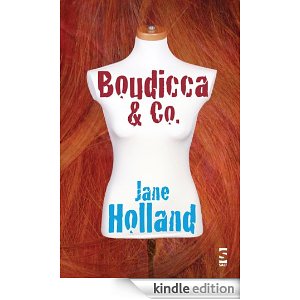
Boudicca & Co relaunches as Kindle edition for just 86p!

'I was dashing from poem to poem, completely compelled.' Helena Nelson, Ambit magazine

Glorious news! 

My second poetry collection, Boudicca & Co, has been launched by Salt Publishing today in a Kindle edition. You don't need a Kindle ereader to buy it, you can download free software from that page for computer or laptop, Mac or PC, and read it on your normal screen.


The paperback is 9.99. The Kindle edition is only 0.86p!


Please help to support poetry on Kindle - still an undiscovered world for most readers - by buying this book for less than a pound, or a dollar if you're in the States, and sharing this link, letting others know that it's now available in a digital edition. 


Many thanks! Below are a few of the reviews and recommendations Boudicca & Co received on first publication in paperback.
*
'Jane Holland's Boudicca & Co is a book of adventurous, resonant inventions. As the title suggests, it offers a new view from the interior - of both country and psyche - in which history and geography are co-opted in effortless interplay. It's a work of synthesis, and of poetic and emotional maturity, in which Holland emerges as a true craftswoman, a supple and graceful thinker with an effortless grasp of line, at the heart of the English lyric tradition.'

Fiona Sampson, Editor of Poetry Review


'I reached the fourth section of the book, the Boudicca sequence, and everything went electric ... There's a touch of Vicki Feaver about the violence and the cool delight in blood and innards, but the work is quite distinctive ... I was dashing from poem to poem, completely compelled.'

Helena Nelson, Ambit 2007


'Extremely powerful and varied ... Holland has both the clarity for the reader and the mastery of language to say what she means in a way that makes the brain tingle with both shock and pleasure ... This collection is outstanding.'

Angela Topping, Stride Magazine


'... we need only compare Holland's work with the anti-war 'poetry' of Harold Pinter to gain some indication of how rich and rewarding her response to modern conflict is - by shifting methods towards the imaginative and narrative elements of poetry, rather than the rhetorical and political. In this sense, the 'Boudicca' sequence has a great deal in common with David Harsent's Legion, which represents a similar attempt by a non-combatant poet to engage intelligently with the realities of war. This is, frankly, an outstanding collection, and Holland, as a result, can now count herself amongst the front rank of contemporary British poets.'

Simon Turner, Gists and Piths, 2007
In her unconventional aspect, Boudicca is peculiarly modern, and there are moments in the sequence, where modern wars and conflicts appear to be invading the ancient story. In ‘'Last Stand'', the woods are ‘'thick / with sniper fire'’ and Romans beat the men with ‘'rifle butts''. By breaking with the historic period of the tale, Holland comments on the repetition of atrocities and war, as if Boudicca is looking forward to the suffering and dehumanisation of twentieth-century wars. 
Zoë Brigley in English Studies
Boudicca & Co. is a bold re-imagining of Britishness. Our contemporary England of Sunday roasts and cyberspace gives way to a wild and alien landscape, a place that Holland lays glinting before us “like a coin tossed in the sun / blunt-edged, foreign.” Steeped in myth and medieval poetry, this is a land of “ruins under rain,” hares, oaks, gargoyles and the Green Man. At the heart of it, embodying both Britain’s fierce beauty and its bloodied past, is Boudicca, and her voice is a startling achievement: modern, pitch-black, funny, and yet hauntingly lyrical. Jane Holland’s second collection is full of love and astonishment, a tribute to the resilience of women, to the power of literature, and, most of all, to: “England // my beleaguered sunken island.”

Poet, Clare Pollard

Saturday, November 24, 2007

On the True Endings of Poems

I sent my second poetry collection, Boudicca & Co., to the much-admired poet Geoffrey Hill a few weeks ago. In response he sent me a note - completely unlooked for, so doubly delightful to receive - making various comments on my poems, including a suggestion to lop off some ten or so lines from the end of one of my favourites.

Having tried this major surgery, curious to see the result, I realised he was right. It did work better without the 'official' ending. This led me to look at why that should be the case, and whether I could perform the same service for any other of my poems that might be over-written.

First though, I wanted to check something I was already uneasily suspicious of, namely that I was still suffering from the novice poet's heavy-handed 'this is the moral of my tale'-style ending. Like most poets, I'd like to think my endings are reasonably apposite and not too predictable. But scouring through them, I felt too few of them possessed any real gravitas, and I think it was the open-ended quality of Hill's suggested ending for my poem - not trying to wrap everything up in a neat lyrical parcel, but throwing a powerful line or two out to the wind instead - that gave that poem its new authority.

So, il miglior fabbro?

Perhaps, though it's important in these situations to trust your own instincts and not merely bow to criticism, however venerable the critic. No one can know your work or intentions better than yourself, after all.

Indeed, trust is at the heart of this issue. Hill's comment was a valuable insight into the nature of poetic trust - i.e. the poet trusting his or her instincts enough to leave the poem at what feels like a dangerously unfinished point, instead of hurrying straight in with nails and rope, anxious to tether the end of the poem to a fixed point.

There has to be space for the reader to sweep in behind you, I suppose, bearing in mind that the reader is a vital part of that triangle: poet, poem, reader. (An unread poem is like a dead limb on a tree - it exists in real time, a part of the whole, but has neither life nor purpose.) So the open ending is a dynamic one for the poem. By contrast, a closed, box-like ending - summing up the poem's purpose or adopting some coy moralising stance - rejects the poem's potential by too sharply defining and limiting the reader's interpretation.

Okay, so we can agree that messages are for Western Union. But can we trust the reader to work it out on their own? And can we trust ourselves to write so brilliantly that we no longer need to qualify everything in the final throes?

It's far easier in a sequence of inter-connected poems, I've found, to experiment with this 'open' style ending. Poems in a sequence tend to lean on each other for authority, significance and lyrical echoes. The stand-alone poem is a rather different beast, tradition alone - perhaps going all the way back to Petrarch in the Middle Ages - dictating that we provide a sound-bite ending to the modern lyric, something to help the reader get the point of those clever metaphors, similes and other dazzling tropes you may have employed.

So if you throw the latter kind of poem open at the end, letting cold air rush into all those unexplained silences, will the poem still work? And will it still qualify as a lyric?

I think it must change the nature of a lyric poem to chop it off at the foot, to leave the moral or purpose behind the poem dangling. This probably connects to its origins in the sonnet form, a marvellous box of delights, seemingly always tied off neatly at the end with its own declaration of intent or shot at literary immortality, e.g.

So long as men can breathe or eyes can see,
So long lives this, and this gives life to thee.
(Sonnet 18, W.S.)

But the changes in formal direction over the past 150-odd years - poetry gradually spiralling out into a plethora of forms and contradictory definitions - must suggest something about a fundamental change in our perception of what poetry is and why we need it (if, indeed, we need it at all). So perhaps Hill is right and it really is time to relax our grip on the telling last line, the moral of the tale, the conclusion to the riddle. To let the poem hang out there, exposed to the elements and - no doubt - the ridicule of critics.

Again, it's dangerous to take too much on trust, especially in terms of your own writing, where instinct and sound experience should take precedence over the opinion of others, but it's equally dangerous not to at least listen to the oracle when it speaks, and consider all the various possibilities before responding.

Sometimes you find even the most unlikely signpost is pointing you in roughly the direction you intended to take anyway.

Thursday, September 20, 2007

Reading at the MAC, Birmingham

I'll be reading at the Midlands Arts Centre in Birmingham later today. I think there are still tickets available if anyone wants to come along. It's a popular monthly open mic night with a guest poet - me, this month. I'll be reading from Boudicca & Co. along with a few newer poems, some published in magazines, some completely virgin.

The event kicks off at about 7.30pm, but I believe you may need to sign up before 7pm if you want to read your own work. Anyway, if you're in the right area and fancy some live poetry tonight, tickets and venue location details are available from the MAC website, here.

I'm knee-deep in revision for my Ancient Greek exam in early October but have still managed to look at a few poems this week. Just scraping at them, pretending to edit and fiddle with the bald little things when really I'm considering deeper issues such as 'Do I really want this poem in my next collection?' and 'Is this next book going to be a vague mish-mash or is it still possible to draw these threads together into some sort of coherent pattern?'

I think it could be a very important collection for me. Either that or it will be a failure in the worst sense, the sort where nobody notices it, not even the toughest critics, where I might as well not have put it out there at all. But although that sounds like I should be under serious pressure to get it right, I don't feel any. I have a fatalistic view of such things. Pushing hard for a particular outcome has never worked for me in the past, and in fact has often been counterproductive.

So I'm trying not to consider the potentially high stakes riding on this next book of poems. Instead, I'm concentrating on writing the book that I want to read, the book that I approve of. There doesn't seem to be any other way to do it. Just taking it slow and steady, one poem at a time ...

Thursday, September 13, 2007

Boudicca on Blogger

I had a lovely surprise today when, logging into Blogger, I found a frequent browser here at Raw Light (Sorlil) had written a short book review on her blog of my latest collection, Boudicca & Co.

I'm off later today to the furthest reaches of Kent, to attend the funeral of my cousin Spike this weekend, who died from cancer a few days ago - only in his early fifties - and who shall be sorely missed. A sad and sombre trip.

While I'm away though, why not check out Sorlil's 'Poetry in Progress' blog and her post about 'Boudicca'?

Monday, June 18, 2007

Simon Turner on 'Boudicca & Co'

More packing has been underway this weekend, and is still ongoing, for our eviction next month. So I do apologise for the lack of blog activity yesterday.

Please accept instead this link to another blog, 'Gists & Piths', written by the estimable Simon Turner, where he has been reviewing my recent poetry collection with Salt: Boudicca & Co.

I've been working on a slow-moving review of Jacob Polley's delicious Little Gods, so hopefully that'll be posted up here sometime tomorrow. First I have to negotiate a lengthy phone call from the Open University, who want to interview me about my Ancient Greek blog as part of some research they're undertaking into how blogging affects or encourages studying long-distance - as I understand it. The life of a blogger, ho!

Friday, June 15, 2007

Reading in Reading

Tonight I shall be reading in Reading, a brand-new experience for me. I've often been through Reading on the train - who hasn't? - but I've never stopped to admire the townscape. Now's my chance though. No doubt it will rain as soon as I arrive in the place. Luckily I love the rain. Especially on these stifling summer nights.

Here are the details:

Poets’ Café
South Street Arts Centre, South Street, Reading.
Friday June 15th
8pm doors, 8.30pm poetry.
£6/£4

Popular monthly open mic in Reading, with a full set from special guest Jane Holland, reading from her latest collection Boudicca & Co (Salt Publishing). The evening is hosted by poet, compere and self-styled English eccentric A.F. Harrold.