Monday, October 17, 2022


Wednesday, July 03, 2019
THE HIVE: when books get declined
Firstly, I apologise for not being able to change titles listed in the sidebar. I've managed to get locked out of my blogger acount, but still have access as a post writer! 😮
So, as part of an eleven-book contract with my publisher, I have written a new dark thriller.
It's called THE HIVE.
On sending it to my publishers a few months back, I noted that it was rather darker than previous psychological thrillers I had written as Jane Holland, leaning toward horror in places, and suggested we might want to use another pen-name instead.
They didn't reply for two weeks. Then they wrote back, declining THE HIVE and terminating my contract with them, except for the final romance in a series due later this year.
Just like that!
I was devastated. I talked the situation over with my very supportive agent. I explained how much I'd been depending on that contract to keep me afloat financially. Everyone knows it can take anything up to a year from acceptance for a new publishing contract to be signed and the initial advance paid. Assuming there even is an advance in these digital-first days.
Only I don't have a year to pay my bills. They need to be paid every month, or things start to fall apart. A full-time writer's life is precarious like that. Which is why I first turned to self-publishing back in 2011 and still regularly publish short fiction online under an array of names. But I rely on my traditional contracts to add cash advances to that income.
So we both agreed that self-publishing this rejected book was the best way for me to keep solvent, while I work on a completely new book to be submitted to other publishers later this year. And I thank my agent profusely for being so understanding.
But that plan, of course, depends on THE HIVE actually selling more than a few copies. So I've decided to publish it as a Jane Holland thriller, as that is my best-selling name.
Worried about the future, with three dependent children still in school, I've now started several online shops as well as my self-publishing sidelines. More on that anon. Jobs are hard to come by in rural Cornwall, and in my fifties with no work experience to speak of, online hustles are probably my best bet. So I'm learning new skills in that area, and working hard to get by.
Curiously, this is not the first time a book of mine has been rejected by publishers (though not while under contract!) and then self-published. Last time, it was GIRL NUMBER ONE. I self-published that in 2015 after multiple rejections, and it reached #1 in the UK Kindle store within a few months of publication. It has since sold over 100,000 downloads.
If THE HIVE manages similar success, I'll be ecstatic. But times have changed since 2015. All I'm hoping for is that this book helps me stay afloat as a struggling writer. I'm not well-off. I didn't marry a wealthy person. I rent my house, I drive an old banger, I have no capital or investments or savings. But I am a hard worker. I write several 'big' books a year, and also self-publish multiple novellas and short stories under other names to supplement that. I am constantly working on something new. Yet still I struggle to pay my bills.
The book market is saturated. Only top names seem to do well these days. Writers get the tiniest slice of the publishing pie, often only a few pennies per sale. Publishers do not support writers by growing them and investing in their careers, as was once the norm, but discard them at the first sign of low sales. Nobody is safe, not even established writers. Readers who want to keep their favourite writers in the game need to help them compete in this dog-eat-dog marketplace, via word-of-mouth and retweets etc. Because what publishers want most is the next shiny new thing ... and while I may be shiny on occasion, I'm not new!
So please, if you like thrillers - or me! - help me get THE HIVE out to new readers. Especially in the US market, which is yet to discover me en masse.
Share, retweet, mention, read, discuss ... Amazon, social media, Goodreads. It all helps.

So, as part of an eleven-book contract with my publisher, I have written a new dark thriller.
It's called THE HIVE.
 |
| The Hive on Amazon UK: 99p |
On sending it to my publishers a few months back, I noted that it was rather darker than previous psychological thrillers I had written as Jane Holland, leaning toward horror in places, and suggested we might want to use another pen-name instead.
They didn't reply for two weeks. Then they wrote back, declining THE HIVE and terminating my contract with them, except for the final romance in a series due later this year.
Just like that!
I was devastated. I talked the situation over with my very supportive agent. I explained how much I'd been depending on that contract to keep me afloat financially. Everyone knows it can take anything up to a year from acceptance for a new publishing contract to be signed and the initial advance paid. Assuming there even is an advance in these digital-first days.
Only I don't have a year to pay my bills. They need to be paid every month, or things start to fall apart. A full-time writer's life is precarious like that. Which is why I first turned to self-publishing back in 2011 and still regularly publish short fiction online under an array of names. But I rely on my traditional contracts to add cash advances to that income.
So we both agreed that self-publishing this rejected book was the best way for me to keep solvent, while I work on a completely new book to be submitted to other publishers later this year. And I thank my agent profusely for being so understanding.
But that plan, of course, depends on THE HIVE actually selling more than a few copies. So I've decided to publish it as a Jane Holland thriller, as that is my best-selling name.
Worried about the future, with three dependent children still in school, I've now started several online shops as well as my self-publishing sidelines. More on that anon. Jobs are hard to come by in rural Cornwall, and in my fifties with no work experience to speak of, online hustles are probably my best bet. So I'm learning new skills in that area, and working hard to get by.
Curiously, this is not the first time a book of mine has been rejected by publishers (though not while under contract!) and then self-published. Last time, it was GIRL NUMBER ONE. I self-published that in 2015 after multiple rejections, and it reached #1 in the UK Kindle store within a few months of publication. It has since sold over 100,000 downloads.
If THE HIVE manages similar success, I'll be ecstatic. But times have changed since 2015. All I'm hoping for is that this book helps me stay afloat as a struggling writer. I'm not well-off. I didn't marry a wealthy person. I rent my house, I drive an old banger, I have no capital or investments or savings. But I am a hard worker. I write several 'big' books a year, and also self-publish multiple novellas and short stories under other names to supplement that. I am constantly working on something new. Yet still I struggle to pay my bills.
The book market is saturated. Only top names seem to do well these days. Writers get the tiniest slice of the publishing pie, often only a few pennies per sale. Publishers do not support writers by growing them and investing in their careers, as was once the norm, but discard them at the first sign of low sales. Nobody is safe, not even established writers. Readers who want to keep their favourite writers in the game need to help them compete in this dog-eat-dog marketplace, via word-of-mouth and retweets etc. Because what publishers want most is the next shiny new thing ... and while I may be shiny on occasion, I'm not new!
So please, if you like thrillers - or me! - help me get THE HIVE out to new readers. Especially in the US market, which is yet to discover me en masse.
Share, retweet, mention, read, discuss ... Amazon, social media, Goodreads. It all helps.
THANK YOU
And I've initially priced THE HIVE at 99p/99c to encourage impulse buys!
The Hive: a brand-new thriller for 2019 from Kindle #1 bestseller Jane Holland
Scarred by fire from infancy, with a persistent stammer, Charlotte has always been in the shadow of her glamorous theatrical parents. So it's a shock when her mother commits suicide.
Left to care for her sick father in the dark maze of her childhood home, Charlotte begins to unravel. First, there's the mysterious arrival of a box of dead bees. Then buzzing noises in the attic. People are watching her. Listening to her.
Everyone thinks she's losing her mind. But an old photo suggests another, more sinister possibility ...
Jane Holland's bestselling thrillers have sold more than 220,000 paid downloads across several continents, and she loves finding brave new readers!
Scarred by fire from infancy, with a persistent stammer, Charlotte has always been in the shadow of her glamorous theatrical parents. So it's a shock when her mother commits suicide.
Left to care for her sick father in the dark maze of her childhood home, Charlotte begins to unravel. First, there's the mysterious arrival of a box of dead bees. Then buzzing noises in the attic. People are watching her. Listening to her.
Everyone thinks she's losing her mind. But an old photo suggests another, more sinister possibility ...
Jane Holland's bestselling thrillers have sold more than 220,000 paid downloads across several continents, and she loves finding brave new readers!

Also
Thursday, September 27, 2018
Back Into Poetry via Ted Hughes
'Surely some revelation is at hand ...' - W.B. Yeats
Back in late October 1998, I had lunch in Oxford with the novelist and poet Mark Haddon. We discussed the recently published Birthday Letters and Hughes' poetry in general, and considered where he might go from there. A few hours later, like a bolt of Hughesian lightning, the great man's death was announced on the news, and suddenly our lunchtime discussion had become an act of retrospection.
The death of the Poet Laureate was a seismic shock within the poetry world, and a source of great distress for me, as a lifelong fan. I had studied poems from The Hawk in the Rain and Lupercal while at school, thanks to a visionary English teacher named Linda Clayton, and went on to write a rather involved essay on The Feminine in Ted Hughes's Gaudete as a mature undergraduate at Oxford. I had constantly reached for his collections to inform my own poetry, happiest under that influence. Yet he had always felt somehow out of reach for me intellectually, my responses to his work instinctual, even visceral.
So when I spotted that the Arvon Foundation was running a Ted Hughes-related writing course to commemorate the 20th anniversary of his death, I booked immediately. This, despite the fact that I stopped writing poems about eight years ago, feeling that poetry had run dry in me, and moved on to prose fiction instead. But I knew that if anything was going to stir poetry in me again, it would be my love of Hughes.

The 5-day course was held in South Yorkshire at Lumb Bank - a large, eccentric house on a steep bank of the Calder Valley, long coveted and eventually owned by Hughes, who later donated it to Arvon to help other writers.
The tutors were Christopher Reid, Hughes's editor at Faber and a poet in his own right (I thoroughly recommend his comprehensive edition of Letters of Ted Hughes) and Steve Ely, a Hughesian with three poetry collections from Smokestack and a non-fiction book, Ted Hughes's South Yorkshire: Made In Mexborough (2015). The midweek guest was Dr Yvonne Reddick whose recent pamphlet Translating Mountains (2017) won the Mslexia Poetry Pamphlet Competition and whose scholarship includes Ted Hughes: Environmentalist and Ecopoet (2017). A surprise drop-in guest at the end of the week was star of the Faber New Poets scheme, Zaffar Kunial, whose debut Us is published by Faber (2018).
The format of the course was a Ted Hughes fan wet dream, frankly.
Our mornings were spent reading and dissecting his poetry in a group, alongside writing exercises in response to what we were learning. In the afternoons, we had one-to-one tutorials to discuss our own material, or wrote poetry in the house where Hughes himself had penned some of the very poems we were studying. We tried physical exercises - retracing Hughes's steps through the Calder Valley on long rainy walks, visiting Plath's grave in nearby Heptonstall churchyard, even throwing handfuls of sycamore keys in the air to recreate specific lines in his poems - and wrote ekphrastic responses to powerful woodcuts by Hughes's friend and illustrator, the artist Leonard Baskin.
We considered the mythic and elegiac strains in his work, and deconstructed his poems in search of his favourite imagery and poetic techniques, such as assonance, alliteration and visual elements. The midweek guest, Yvonne Reddick, read an unpublished poem by Hughes, 'The Grouse,' which is included in her recent book, and discussed both its fascinating origins and its significance within the canon. For myself, I came across a dead creature in the bee-bole garden at Lumb Bank - I thought this was a young crow, but fellow attendee Abi Matthews says it's a mole! - whose black, melting corpse was reminiscent of Baskin's sketch that inspired 'The Knight,' one of Hughes's strongest pieces in Cave Birds. Naturally, I then wrote my own poem on the find.
Before arriving at Lumb Bank, I had not written any new poems for about eight years, though I'd occasionally picked at extant work. I work as a writer, but in prose. I wasn't even sure that I could write a poem (or not what I would term a poem) and imagining my likely failure was a source of private terror for me. It felt as though somebody else had written my previous poetry, and I had no idea how to get back to that person.
But, as my psyche presumably knew, Ted Hughes was a bridge between those two halves of myself. Reading his work closely, considering his various influences - including visionary poets who have always excited me too, such as Yeats, Eliot, Blake, Hopkins etc. - and allowing his cadences to ring in the dark crevasse that yawned between me and that world, all these fed something inside me that made poetry possible again.
By the end of the second day, I had begun to sense what Lawrence Lipking refers to in The Life of the Poet (University of Chicago Press, 1981) as a moment of 're-initiation'. Suddenly, I understood again how to write poetry, and in fact felt the most incredible pressure to do so, the pressure of dammed-up poems - not a meagre few, but enormous numbers of the bloody things, unwritten yet already formed and perfectly alive in my lizard-brain, just waiting to be accessed.
The danger is that away from that rarefied air, the sacred ground of poetic initiation, once more earning my daily crust by writing popular fiction, perhaps I'll be unable to tap into that treasure-house of unwritten poems. That's a genuine risk. And it's not one I can avoid. We all have to work and pay our bills somehow, and my day job - a demanding job too - is writing genre fiction.
But with diligent watchfulness, I hope to build and protect a few spaces within my life as a prose-writer where poetry has a chance to breathe. To that end, I'll be going back to Ted Hughes - reading, studying, dissecting his work on my own, and hoping to recreate at least a little of the magic I felt at Lumb Bank.
I also hope to keep in touch with my fellow Hughesians from the course, whose poems, discussions, and intelligent insights made the week particularly special.
Back in late October 1998, I had lunch in Oxford with the novelist and poet Mark Haddon. We discussed the recently published Birthday Letters and Hughes' poetry in general, and considered where he might go from there. A few hours later, like a bolt of Hughesian lightning, the great man's death was announced on the news, and suddenly our lunchtime discussion had become an act of retrospection.
The death of the Poet Laureate was a seismic shock within the poetry world, and a source of great distress for me, as a lifelong fan. I had studied poems from The Hawk in the Rain and Lupercal while at school, thanks to a visionary English teacher named Linda Clayton, and went on to write a rather involved essay on The Feminine in Ted Hughes's Gaudete as a mature undergraduate at Oxford. I had constantly reached for his collections to inform my own poetry, happiest under that influence. Yet he had always felt somehow out of reach for me intellectually, my responses to his work instinctual, even visceral.
So when I spotted that the Arvon Foundation was running a Ted Hughes-related writing course to commemorate the 20th anniversary of his death, I booked immediately. This, despite the fact that I stopped writing poems about eight years ago, feeling that poetry had run dry in me, and moved on to prose fiction instead. But I knew that if anything was going to stir poetry in me again, it would be my love of Hughes.

The 5-day course was held in South Yorkshire at Lumb Bank - a large, eccentric house on a steep bank of the Calder Valley, long coveted and eventually owned by Hughes, who later donated it to Arvon to help other writers.
The tutors were Christopher Reid, Hughes's editor at Faber and a poet in his own right (I thoroughly recommend his comprehensive edition of Letters of Ted Hughes) and Steve Ely, a Hughesian with three poetry collections from Smokestack and a non-fiction book, Ted Hughes's South Yorkshire: Made In Mexborough (2015). The midweek guest was Dr Yvonne Reddick whose recent pamphlet Translating Mountains (2017) won the Mslexia Poetry Pamphlet Competition and whose scholarship includes Ted Hughes: Environmentalist and Ecopoet (2017). A surprise drop-in guest at the end of the week was star of the Faber New Poets scheme, Zaffar Kunial, whose debut Us is published by Faber (2018).
 |
| 'Writing with Ted Hughes' - Lumb Bank, Sep 2018 |
The format of the course was a Ted Hughes fan wet dream, frankly.
 |
| Me, on the road to Mytholmroyd, the small Yorkshire town where Hughes was born in 1930 |
Our mornings were spent reading and dissecting his poetry in a group, alongside writing exercises in response to what we were learning. In the afternoons, we had one-to-one tutorials to discuss our own material, or wrote poetry in the house where Hughes himself had penned some of the very poems we were studying. We tried physical exercises - retracing Hughes's steps through the Calder Valley on long rainy walks, visiting Plath's grave in nearby Heptonstall churchyard, even throwing handfuls of sycamore keys in the air to recreate specific lines in his poems - and wrote ekphrastic responses to powerful woodcuts by Hughes's friend and illustrator, the artist Leonard Baskin.
 |
| Sylvia Plath's grave in Heptonstall churchyard: the quotation is from 16th century Chinese poet, Wu Ch'Eng-En |
We considered the mythic and elegiac strains in his work, and deconstructed his poems in search of his favourite imagery and poetic techniques, such as assonance, alliteration and visual elements. The midweek guest, Yvonne Reddick, read an unpublished poem by Hughes, 'The Grouse,' which is included in her recent book, and discussed both its fascinating origins and its significance within the canon. For myself, I came across a dead creature in the bee-bole garden at Lumb Bank - I thought this was a young crow, but fellow attendee Abi Matthews says it's a mole! - whose black, melting corpse was reminiscent of Baskin's sketch that inspired 'The Knight,' one of Hughes's strongest pieces in Cave Birds. Naturally, I then wrote my own poem on the find.
 |
| The dead crow-mole I found at Lumb Bank, the position of its limbs uncannily similar to a sketch by Baskin that inspired Hughes' poem 'The Knight'. |
Before arriving at Lumb Bank, I had not written any new poems for about eight years, though I'd occasionally picked at extant work. I work as a writer, but in prose. I wasn't even sure that I could write a poem (or not what I would term a poem) and imagining my likely failure was a source of private terror for me. It felt as though somebody else had written my previous poetry, and I had no idea how to get back to that person.
But, as my psyche presumably knew, Ted Hughes was a bridge between those two halves of myself. Reading his work closely, considering his various influences - including visionary poets who have always excited me too, such as Yeats, Eliot, Blake, Hopkins etc. - and allowing his cadences to ring in the dark crevasse that yawned between me and that world, all these fed something inside me that made poetry possible again.
 |
| One of the industrial chimneys of the Upper Calder Valley that inspired poems like 'Lumb Chimneys' in TH's Remains of Elmet, clearly visible from Lumb Bank |
By the end of the second day, I had begun to sense what Lawrence Lipking refers to in The Life of the Poet (University of Chicago Press, 1981) as a moment of 're-initiation'. Suddenly, I understood again how to write poetry, and in fact felt the most incredible pressure to do so, the pressure of dammed-up poems - not a meagre few, but enormous numbers of the bloody things, unwritten yet already formed and perfectly alive in my lizard-brain, just waiting to be accessed.
The danger is that away from that rarefied air, the sacred ground of poetic initiation, once more earning my daily crust by writing popular fiction, perhaps I'll be unable to tap into that treasure-house of unwritten poems. That's a genuine risk. And it's not one I can avoid. We all have to work and pay our bills somehow, and my day job - a demanding job too - is writing genre fiction.
 |
| The view from my bedroom window at Lumb Bank, where I wrote several new poems |
But with diligent watchfulness, I hope to build and protect a few spaces within my life as a prose-writer where poetry has a chance to breathe. To that end, I'll be going back to Ted Hughes - reading, studying, dissecting his work on my own, and hoping to recreate at least a little of the magic I felt at Lumb Bank.
I also hope to keep in touch with my fellow Hughesians from the course, whose poems, discussions, and intelligent insights made the week particularly special.
Tuesday, October 25, 2016
BERTIE'S GIFT

I have published a new novel with Hodder & Stoughton, out now, called BERTIE'S GIFT.
It's written under the pen-name Hannah Coates.
It's the first person narrative of a beagle called Bertie who is separated from his beloved sister Molly at a dog shelter. He's adopted by a dysfunctional family with two grumpy cats, plus a mad poodle who lives next door. Can Bertie find poor Molly again and somehow 'fix' his dysfunctional family, despite only being a small dog?
A feel-good Christmas tale for all the family!
Hardback editions are in larger branches of Asda and WHSmith High Street, and also can be ordered from any bookshop or Amazon.
BERTIE'S GIFT (Amazon UK)

Wednesday, November 11, 2015
GIRL NUMBER ONE hits Top 30 in the UK Kindle store
This is just to thank everyone for their support of my self-published novel, GIRL NUMBER ONE, and let you know that, less than eight weeks after publication, it reached number 27 in the UK Kindle store today.
I am still pinching myself, wondering if it is a dream ...
And since I appear to be rather good at selling thrillers, I have a new, dedicated website for mine: girlnumberonethriller.com
I am still pinching myself, wondering if it is a dream ...
And since I appear to be rather good at selling thrillers, I have a new, dedicated website for mine: girlnumberonethriller.com
 |
| GIRL NUMBER ONE (UK link) |
Friday, September 25, 2015
GIRL NUMBER ONE: new fiction out this week
 |
| Girl Number One |
About a year and a half ago, while I was still knee-deep in an historical fiction series, it was suggested to me by a senior editor that I should write a contemporary thriller. A crime novel, but not a police procedural. Being a rabid fan of Lee Child's Jack Reacher novels, I embraced the idea with enthusiasm and excitement. At last, a chance to show what I could achieve as a contemporary writer within a popular mass-market genre.
But of course it's also an over-crowded market, and the novel I produced over the next year did not appeal to the editor who first suggested it. It went through several laborious redrafts, then was sent out to other publishers. Nobody wanted it. The rejections differed as to detail but the overall message was the same. Like the three bears' porridge, it was too hot, too cold, too salty, too sweet etc. for the market.
The project was then handed back to me, with the suggestion that I should self-publish.
To say I was disappointed is grossly to understate the matter. It was a serious blow to my self-confidence as a writer, especially as I was by that stage out of contract with all my publishers. After some years in traditionally published historical fiction, that book represented my calling-card script as a contemporary writer. A calling-card that had been handed back to me by a disdainful majordomo, and the door slammed in my face.
After some time nursing my wounds - I wish I could say 'downing tequila on a desert island' but I'm not that cool - I sorted through all the rejections I had seen and picked out the main thrust of their issues. I worked out how I could rewrite the book to 'fix' it. One key change was making my main protagonist older. A simple enough change, on the face of it. But of course that involved rewriting every single page of the book, because in the process of recasting her character, her narrative voice had to change, to mature, to harden. Rather like me as a writer ...
 |
| I really wish I had not chosen to write this scary scene so late at night ... |
The main differences I noted between writing GIRL NUMBER ONE (the title of my thriller) and my previous novels, mostly either historical fiction or romances, were as follows:
Pace - a contemporary thriller is fast and furious. It has to be, to deliver the requisite thrills and keep an easily distracted reader turning the page. So introspection and description take a back seat, and action comes to the fore. The verb becomes king here, the adjective and adverb have to be rooted out. Not 'I thought' or 'I saw' (I chose a first person narrator) but 'I did'. Dialogue can take the place of internal monologue, which means it has to work harder, to underline character, drop clues and turn the plot.
Tone - the narration of a contemporary thriller is terse, or at least that's how I prefer it. It's also highly self-aware. This is someone who observes everything around them, whether a trained or natural detective, constantly noticing, examining, deciphering, unravelling, understanding. And often without an excess of emotional response, as emotion tends to hamper that process. (Emotional response being the sine qua non of the romantic novel, I often found myself working at the opposite end of the narrative spectrum to my other books.)
Character - the characters in a contemporary thriller are not, in general, those you might encounter in other genres (though that rather depends on the writer). They have to be boldly drawn, sometimes even starkly and at speed, because a thriller is about action and reaction, rather than a leisurely character study. But the main protagonists also need qualities that others around them noticeably lack: massive intelligence, strength, resolve, courage, generosity, kindness, plus a few special skills. They must leap off the page without being caricatures, and linger in the reader's memory, not least because some of them may become suspects later.
Where the narrator is concerned, assuming that is your chief protagonist, we need the reader to care about that person deeply. Otherwise, there will be little reason to keep reading when he or she is put in danger. Such a character must be sympathetic and strongly-drawn enough to elicit an emotional response from the reader. By which I really mean, he or she must feel true.
Truth - a contemporary thriller should seem realistic, even more so than romantic or historical fiction, and the actions of its characters must be completely believable too, even when your plot is unlikely or even preposterous at times. So how to achieve this? In the same way as a sci-fi or fantasy novel, you have to anchor the world of your novel somewhere that feels very realistic, and therefore works to distract the reader from the unlikeliness of your plot.
In my case, I decided to follow the well-worn advice, write what you know, and achieve narrative truth that way. So I based the world of my debut thriller on the Cornish village in which I was actually living at the time of writing. I was then able to describe, with absolute accuracy and consistency, the village layout and its surrounding area, the views, the flowers in bloom at each season, the likely weather, the very feel of the air ... A bit of a cheat, perhaps, but I wanted to nail that 'truth' element of the thriller first-time-out.
Did I manage to nail it though?
The proof of the thriller is in the reading, and I hope you will give mine a shot. You can find a free sample or buy GIRL NUMBER ONE on Amazon. Digital only at the moment, with paperback POD to follow.

This blog post first appeared September 21st 2015, at 52 WAYS TO WRITE A NOVEL.
Saturday, March 21, 2015
Thimblerig Books website
Since a large number of my independent titles are published under Thimblerig Books, I've set up a new website where you can find all of them under one roof, as it were.
 The new site provides details for digital-only indie titles by Jane Holland, Elizabeth Moss, Beth Good and Victoria Lamb. It's still in the process of being put together, but there's enough online now to give you a sense of where I'm going with it.
Kind of a one-stop-shop for my independent books, with covers and blurbs and author details for browsers, and quick-click links through to Amazon for those who decide to buy!
At some point in the future I may decide to publish other writers under the Thimblerig Books imprint. Who knows? Meanwhile, here it is:

Kind of a one-stop-shop for my independent books, with covers and blurbs and author details for browsers, and quick-click links through to Amazon for those who decide to buy!
At some point in the future I may decide to publish other writers under the Thimblerig Books imprint. Who knows? Meanwhile, here it is:
digital books with attitude
Monday, March 02, 2015
21 Ways To Write A Commercial Novel
I'm delighted to announce that my first non-fiction title is now available digitally. Kindle only, I'm afraid, for those who don't own Kindles, though you can access it via free Kindle apps on other devices like laptops, iPads or computers. Just go to the book page on Amazon and try to buy it - Amazon will then guide you through the process of installing one of these Kindle-reading apps on whichever device you are on.
This new book is based on my Creative Writing blog, and is called 21 WAYS TO WRITE A COMMERCIAL NOVEL.
This new book is based on my Creative Writing blog, and is called 21 WAYS TO WRITE A COMMERCIAL NOVEL.
 | ||||||||||
| 21 WAYS TO WRITE A COMMERCIAL NOVEL: UK link |
A 'How To Write' guide based on the first twenty-one weeks of award-winning author Victoria Lamb's 52 WAYS TO WRITE A NOVEL blog.
Bursting with up-to-date information and entertaining anecdotes from the world of writing and publishing, this guide also features helpful comments on writing from both new and established writers, including Rowan Coleman, Katie Fforde, Judy Astley, Lesley Cookman, Nuala Ni Chonchuir, Alison Morton, Elizabeth Moss and many, many others.
A goldmine of advice for writers from an author of over twenty commercial novels, covering these general topics:
Beginnings
Fake It Till You Make It
Commercial Ideas
Research
Planning
Hooks And Teasers
How To Open Chapters
How To Close Chapters
Writing A Commercial Scene
Location, Location, Location
Writing Complex Characters
Staying Commercial
Novel Avoidance Syndrome
Writing The Commercial Synopsis
Dealing With Rejection
Other Writers
Four-Point Commercial Checklist
Changing Identities
Ten-Point Guide To The Commercial Novella
Writing Your Novel
Rowan Coleman’s Advice To New Writers
Thursday, October 23, 2014
FLASH BANG: New & Selected Poems
I'm thrilled to announce the publication today of FLASH BANG: my New and Selected Poems 1996-2014. Almost twenty years in the making!
I've been hanging on for the past few years, wondering what to do about a Selected, which publisher to approach. But my experience with self-publishing - and my disposition in general! - has made this the best choice for me at the moment, as I explain in my previous post.
I hope those who have enjoyed my writing in the past will take this opportunity to pick up, at a very reasonable price, a selection of my best work to date, along with some brand-new poems. It's been a big step for me, publishing this selection of old and new poems, and I would be extremely pleased if some of you at least wish to come along on the journey.
All profits to the author!

I've been hanging on for the past few years, wondering what to do about a Selected, which publisher to approach. But my experience with self-publishing - and my disposition in general! - has made this the best choice for me at the moment, as I explain in my previous post.
I hope those who have enjoyed my writing in the past will take this opportunity to pick up, at a very reasonable price, a selection of my best work to date, along with some brand-new poems. It's been a big step for me, publishing this selection of old and new poems, and I would be extremely pleased if some of you at least wish to come along on the journey.
All profits to the author!
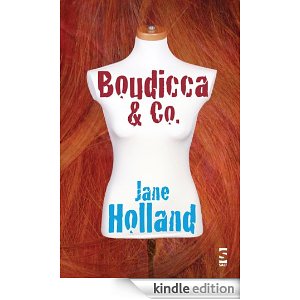
FLASH BANG: New & Selected contains extracts from the following books: 'The Brief History of a Disreputable Woman' (Bloodaxe, 1997), 'Boudicca & Co.' (Salt Publishing, 2006), 'Camper Van Blues' (Salt Publishing, 2008), and 'On Warwick: Poems of the Warwick Poet Laureateship' (Nine Arches Press, 2008).
Previously unpublished work includes extracts from: 'Gawain', a new version from the Middle English poem; 'Hango Hill: Poems of Illiam Dhone (Manx Martyr)'; 'The Dream of the Cross', translated from the Anglo-Saxon; plus a clutch of new poems.
‘Extremely powerful and varied … Holland has both the clarity for the
reader and the mastery of language to say what she means in a way that
makes the brain tingle with both shock and pleasure … This collection is
outstanding.’
ANGELA TOPPING, Stride Magazine
'I reached the Boudicca sequence, and everything went electric … There’s a touch of Vicki Feaver about the violence and the cool delight in blood and innards, but the work is quite distinctive. I was dashing from poem to poem, completely compelled.'
'I reached the Boudicca sequence, and everything went electric … There’s a touch of Vicki Feaver about the violence and the cool delight in blood and innards, but the work is quite distinctive. I was dashing from poem to poem, completely compelled.'
HELENA NELSON, Ambit
'a true craftswoman, a supple and graceful thinker with an effortless grasp of line, at the heart of the English lyric tradition.'
'a true craftswoman, a supple and graceful thinker with an effortless grasp of line, at the heart of the English lyric tradition.'
FIONA SAMPSON, former Editor of Poetry Review
Available as an ebook (can be read with free Kindle software on Kindles, iPads, iPhones and most other devices and computers) at:
Sunday, October 12, 2014
Self-Publishing: The Last Great Adventure in Poetry?
What do Walt Whitman, TS Eliot, Shelley, ee cummings, Thomas Kinsella, Rose Kelleher, Alexander Pope and RS Thomas have in common?
Apart from being well-respected poets, they all self-published their poetry at one stage or another.
The practice of self-publishing has never been easier nor more widespread. Yet the stigma of self-publishing, perhaps especially where poetry is concerned, still exists. Why is this?
Many readers of contemporary poetry - almost invariably poets or writers themselves these days - assume that poetry which is self-published was not good enough to stand the rigour of editorial choice. They imagine such books must issue from self-indulgent or desperate souls whose last resort is to self-publish their dubious poems, unable to find a readership elsewhere.
But of course this is no longer the case. And probably never was.
Yet the idea persists that self-published poetry is not worth the same money you might happily fork out for a traditionally published book. After all, how are you supposed to know if it is any good? You may be completely taken in by a nice cover or interesting blurb, or another poet's recommendation, and spend your hard-earned cash on rubbish.
Whereas everyone knows that traditionally published poetry, the sort that is shortlisted for prizes and published by sober and respectable places like Faber or Picador, for example, can only ever be excellent. Perhaps even brilliant. And certainly worth paying for. Otherwise why would those clever editors, with their flair and good taste in poetry, have selected them for publication above all others?
Besides, why would any poet whose work was good enough to be traditionally published actually choose to self-publish?
Well, there are many reasons. One is that it is pointless to send poetry to traditional publishers in the sure knowledge that you do not write work which will fit into their very list. I am bored by the seemingly endless struggle to fit into boxes designed to showcase one type of work and exclude all others, work which is increasingly bloodless, uninteresting and limited. This is not about a lack of talent - though for some, that is indeed the unfortunate reason they have not found favour with mainstream publishers - but a total failure of interest in what is currently considered 'good' poetry. I used to enjoy that struggle to fit in, and engaged with much highly praised contemporary work, hoping to find something there to excite me. But no longer.
Contemporary British poetry feels horribly sterile at the moment, at least in the higher echelons. It's an exercise in stifling personality and freedom, and keeping everything tight and restrained. The adventure of self-publishing, of striking out on your own and making public precisely what you wish to make public, without reference to an editor whose taste almost certainly will not match your own, and whose suggestions you will feel obliged to follow - this is perhaps one of the last great adventures left to us in poetry.
Of course, along with self-publishing comes the necessary abandonment of any hope that you will be noticed by critics or recognised for your work. That is a tricky one, because every poet has an ego. But it's an acknowledgement that some goals are simply unattainable. A wide readership is out of my reach now. But I can still rebel and enjoy kicking over the traces!
So maybe only a small handful of people will buy my self-published book. But they will at least be readers who have gone out of their way to find it and actively wish to read my work. They will not have bought it because of who the publisher is, or because the poet is well-known or just appeared at a big festival, so 'must be good'. These are intelligent, discerning poetry readers who wish to engage with work that isn't any of those worthy things, but which might still prove interesting for any number of reasons.
I am not well-heeled enough to pay for a paperback copy of my self-published poetry. So my self-published work is only on Kindle or PDF files. But since I am a firm believer in ebooks, and in the artistic purity and freedom of self-publishing on the whole, this is not something that bothers me. It also means I can offer most of my publications at lower prices than you would expect from large publishers.
My New & Selected Poems is out this month in a collection available only on Kindle. It's called FLASH BANG.
It contains generous extracts from four of my five traditional poetry publications to date (excluding The Lament of the Wanderer), plus extracts from unpublished long poems and sequences, and a selection of new individual poems.
If nothing else, I hope it will be interesting for readers to contrast self-published work like this with poetry you may also be reading from traditional poetry publishers. Take a chance!
 | |
| FLASH BANG (New & Selected Poems) is available for ebook pre-order now. |
Monday, August 04, 2014
Horizon Review Archive Project
 |
| Random poetic image. Enjoy. |
I left the post when my own writing commitments grew too much, and the magazine was later edited by Katy Evans-Bush.
The magazine folded a few years later, and sadly has since disappeared from the internet. In the interests of 'rescuing' some of the fine contributions to that magazine, I have been given permission to republish a selection here at Raw Light.
If you had work in Horizon Review - either under my editorship or Katy Evans-Bush's - and would like to see it archived here, please get in touch. I do not have access to work featured in later editions of the magazine, so you may need to send the files as well.
The work will appear in no particular order. It is unlikely dates of original publication will be included, as there is little access to records - apart from the odd cached post.
This is an on ongoing project, heavily reliant on tracking down individual contributors in order to seek permission to republish their work, so it may take place over several years. Do let people know about this project if you think they may have been involved in the magazine.
I am hoping to include poetry and fiction as well as articles and reviews, but obviously it will depend on what people are willing for me to republish. Please note, no one's work will be republished without permission. There are no fees for republishing, the archive project is a non-profit-making attempt to establish at least a partial record of what was in the magazine. But those who do choose to be republished may wish to update their bios and photos at the same time, i.e. promoting newer work.
This project's success will depend on people sharing this information and helping me out with locating writers and seeking permissions. So thanks in advance!
Jane
Sunday, August 03, 2014
Horizon Archives: Jane Holland reviews Plumly on Keats

A Touch of
Irony:
Jane Holland on Stanley Plumly’s creative biography of Keats.
Part of the Horizon Review Archive Project
Stanley Plumly, Posthumous Keats (Norton, 2008) £16.99
Almost compulsively, it seems, each age must reinvent the great poets for themselves, with fresh biographies and critical studies to trump their antecedents. Stanley Plumly’s latest work, ‘Posthumous Keats’, is among the newest examples of this compulsion and one which amply demonstrates the possibilities and limitations inherent in a work of critical biography. His book - or ‘meditation’ as one critic has it - on the quintessential English Romantic poet, John Keats, takes its inspiration from Plumly’s own response to the tragic young poet’s life and work. From that personal foundation, ‘Posthumous Keats’ radiates out into a creative and often highly imaginative reconstruction of Keats’ last years of life, including the so-called ‘Living Year’ of 1818-19 in which he wrote some of his best-loved poems.
Plumly is not only a lecturer at the University of Maryland but also an experienced poet and writer himself, and his expertise at creative non-fiction is one of the hallmarks of this biography. The early life, that fateful last trip to Rome, the deathbed scenes, and especially the aftermath of Keats’ early death at the age of 25 - all these are imagined with such keen novelistic instinct that Plumly puts himself almost in the position of secret observer rather than scholarly biographer. So in the following, densely-written passage, Plumly conjures up for us the pungent atmosphere of Keats’ daily environs as a young medical student in London:
Almost compulsively, it seems, each age must reinvent the great poets for themselves, with fresh biographies and critical studies to trump their antecedents. Stanley Plumly’s latest work, ‘Posthumous Keats’, is among the newest examples of this compulsion and one which amply demonstrates the possibilities and limitations inherent in a work of critical biography. His book - or ‘meditation’ as one critic has it - on the quintessential English Romantic poet, John Keats, takes its inspiration from Plumly’s own response to the tragic young poet’s life and work. From that personal foundation, ‘Posthumous Keats’ radiates out into a creative and often highly imaginative reconstruction of Keats’ last years of life, including the so-called ‘Living Year’ of 1818-19 in which he wrote some of his best-loved poems.
Plumly is not only a lecturer at the University of Maryland but also an experienced poet and writer himself, and his expertise at creative non-fiction is one of the hallmarks of this biography. The early life, that fateful last trip to Rome, the deathbed scenes, and especially the aftermath of Keats’ early death at the age of 25 - all these are imagined with such keen novelistic instinct that Plumly puts himself almost in the position of secret observer rather than scholarly biographer. So in the following, densely-written passage, Plumly conjures up for us the pungent atmosphere of Keats’ daily environs as a young medical student in London:
It is a busy, dark, Dickensian part of town, exposed as much to sewage and garbage as to the prison life of the Clink and the new Marshalsea network of jails, and within hailing distance of the infamous Mint. There is an etching of the borough from 1820 that, in artistic perspective, makes it look like nineteenth-century southern Manhattan along the East River, rather like Whitman’s ideal picture of it in “Crossing Brooklyn Ferry”.
Nor does Plumly dwell solely on Keats. His account of the later drowning of Shelley and his two unfortunate companions in the Gulf of Spezia is beautifully and sparingly achieved through a combination of official documents and letters, and some artful supposition. Much is made of Keats’ final volume of poems, given to Shelley by Leigh Hunt and found in the drowned poet’s inner pocket after his body is washed up on the beach. The grimly prophetic line ‘I am borne darkly, fearfully, afar ‘ of Shelley’s from the close of his Adonais is recalled. We are reminded, with a touch of irony, that Keats had turned down an invitation to stay with the Shelleys in their Italian coastal villa, perhaps not wishing to die in the other poet’s arms but to remain out of sight for his last few weeks.
The artist Severn’s death and burial - the close friend who famously sketched Keats on his deathbed - is described in no less careful detail. Fanny Brawne’s dying admission of love for Keats is also discussed, and her covert stash of memorabilia - hidden from her husband and children for forty-odd years - is opened and explored for the secrets it may reveal about their relationship. An air of fateful and sinister oppression hangs over these scenes, as it does over the book as a whole, which is at times redolent of an Agatha Christie murder mystery - where all the suspects must gather after the body has been discovered, to be interviewed in turn.
But when there is no mystery, no whodunit to be solved, just a set of unfortunate circumstances that led to somebody’s death, what is to be gained from these meticulous reconstructions of poets’ lives, often many centuries after they have shuffled off this mortal coil?
This is a difficult question to answer without addressing the issue of prurience. But one thing it demonstrates, at least, is that the cult of celebrity was no twentieth-century invention, as this diary entry from a Mrs. Gisborne, encountering the young poet at Leigh Hunt’s home shortly before his best - and final - collection of poems was to be published, confirms:
Mr. Keats was introduced to us the same evening; he had lately been ill also, and spoke but little; the Endymion was not mentioned, this person might not be its author; but on observing his countenance and his eyes I persuaded myself that he was the very person.
Celebrity aside, there is also the important consideration that the significant moments of a great poet’s life - however painfully short - ought to be documented, to be borne witness to, both by those who were there at the time and those who would continue to build on the legend that is The Famous Poet. For somewhere in amongst those lovingly reconstructed details we may find vital clues to our own creative development - clues to how a poet grows into his or her identity and inheritance. As Lawrence Lipking writes in The Life of the Poet: Beginning and Ending Poetic Careers (Chicago, 1981):
Keats seems to hold the key to everything we would like to know about how one becomes a poet. At twenty he was no more promising than any number of other would-be authors; suddenly, just short of his twenty-first birthday, he left all the rest behind. What happened?
Plumly himself addresses the problematic issues of prurience and celebrity in various oblique asides during the course of this biography. ‘What is the accumulative, acquiring power, forty years on, of a ring, a lock of hair, a miniature of vague likeness?’ he demands, contemplating the way Keats’ inner circle, many of them nonentities in themselves, have stepped into literary history alongside him. So Keats himself, Plumly ironically claims, ‘becomes their biographer’.
But a famous poet’s life - personal in the present, at the point of first contact - has a way of becoming impersonal with time, of passing into new hands, none of whom will have known the person under scrutiny and for whom that life must become - like The Waste Land, which Plumly references here - a heap of broken images rather than an organic whole:
Bric-a-brac, relics, memorabilia, items around which has congregated an aura of light of the most personal depth and value. But what if that value becomes, on its own, not just personal, but universal? Who owns that memory then? These fragments I have shored against my ruins. The pieces and parts of Keats that each of his friends felt proprietary toward fragmented any chance of a coherent sense of his character and career in the living moment after his death.
Keats himself, resigned to his approaching death, may have sensed how such fragments would be all that remained of his life. Breaking away from his friends and from the woman he wanted to marry - but now never would - he retreated to Rome to die a lonely death, burningly aware of the poems he had failed to write. Thus his last letter, addressed to his friend Brown:
-->
I have an habitual feeling of my real life having past, and that I am leading a posthumous existence. God knows how it would have been - but it appears to me - however, I will not speak of that subject.As a practitioner himself, Plumly is also acutely aware of the despair Keats felt at his own premature death. There can be few things more poignant, after all, for a poet of Keats’ ability, than to die with the knowledge of great poems unwritten. Plumly’s response - a deeply personal one, as he acknowledges elsewhere - is to comfort and reassure the dead poet even in the impersonal, forensic act of reconstructing his ‘posthumous existence’.
So here Plumly pauses to reprise Keats’ last letter, examining it with such thoughtfulness and intensity that it becomes almost a last poem in his hands:
“It runs in my head we shall die young” - George, yes, but perhaps you too, Brown, and maybe Keats’s sister, maybe Fanny Brawne herself, and all of you back there in life. Can we correct our mistakes? Yet if we die before they can be corrected, they will be forgiven. Death is forgiving. “I can scarcely bid you good bye.” Keats’s exit line, “I always made an awkward bow,” is not unlike his desired epitaph: “Here lies one whose name was writ in water.” Both make a gesture, a memorable gesture; both, thus, are poetry; both close without closure; both elevate the moment; and both speak in the past tense, the posthumous tense.
This article first appeared in HORIZON REVIEW
and has been archived at Raw Light
as part of the Horizon Review Archive Project.
as part of the Horizon Review Archive Project.
Tuesday, July 08, 2014
A Poem: Women's Prayer Group, Coventry

The photo (left) was not taken at Coventry, but at Flecknoe Church, Warwickshire. I don't have any shots of my own of the glorious interior of Coventry Cathedral, so chose this to accompany my poem instead.
This is one of those 'true' poems in that I did once belong to a prayer group that met in an upper room at the Deanery next to Coventry Cathedral. I no longer do such foolish things, but I still like the poem.
This is one of those 'true' poems in that I did once belong to a prayer group that met in an upper room at the Deanery next to Coventry Cathedral. I no longer do such foolish things, but I still like the poem.
I wonder if anyone ever fixed that clock ...
Women’s Prayer Group, CoventryThe clock on the deanery mantelpiecehas stopped. Outside, a spireis all that’s leftof our medieval cathedral, burnt outby fire bombs in the war.Our group (there are usually eightor nine of us) meetseach Wednesday for prayer and supperin an upper room. Here, we setsuch ordinary things as childcare, husbands –our daily bread –against St. Paul’s teachings. How muchshould we give to the church?How much to the poor?We struggle for words or bore each otherwith pettiness. Yet each weekwe pray and each weekthe clock tells us the same thing: look up!Bombs are still falling here,their silent detonationspoised a finger’s-breadth above each head,held off by prayer.
Saturday, June 28, 2014
No Poet Is A Sentimentalist
 |
| The poet W.B. Yeats, photographed by Alice Boughton, 1903. |
Last night, reading Cleanth Brooks' book of critical essays, A Shaping Joy (1971), I became intrigued by this quotation from W.B. Yeats' 'Anima Hominis' (in Per Amica Silentia Lunae): 'no fine poet, no matter how disordered his life, has ever, even in his mere life, had pleasure for his end. Johnson and Dowson ... were dissipated men ... and yet they had the gravity of men who had found life out and were awakening from the dream ... Nor has any poet I have read of or heard of or met with been a sentimentalist. The other self, the anti-self ... comes but to those who are no longer deceived, whose passion is reality.'
Every time I attempt to articulate why I enjoy this description and find it important, I fumble it. So I'll just put it out there, for others to read if they wish, and perhaps some clearer thoughts will arrive in time.
Though I have a suspicion Yeats might have found it relatively easy to meet poets today who are 'sentimentalists'. Unfortunately.
Thursday, June 26, 2014
UNCUT POETS: reading at the Phoenix, Exeter
Here are the details.
Starts at about 7.15- 7.30pm if you're thinking of coming along, and it's £5 on the door.
I'll be reading from several of my published books, along with new work.
Hope to see you there!
Thursday, May 22, 2014
Publication Day for ROSE BRIDE, written as Elizabeth Moss
 |
| Can Margerie ever escape her wrongful reputation as a courtesan? ROSE BRIDE: out now |
The final title in the Lust in the Tudor Court series: scorching Tudor erotica for fans of Sylvia Day, The Tudors and Philippa Gregory's White Queen.
She is a fallen woman, an object of men's lust...
Margerie
Croft yielded up her virginity before her wedding, and then fled from
her eager suitor - knowing that she could not marry a man she did not
love. Now she is viewed as soiled goods, fit for only for the role of
courtier's plaything.
He sees something in her that others don't...
Virgil
Elton is King Henry VIII's physician, working on a tonic to restore his
sovereign's flagging libido. But first it must be tested. Who better,
then, than the wanton Margerie Croft? But as he gets to know her Virgil
discovers someone as intelligent and passionate as she is beautiful -
someone who has been gravely misunderstood.
For her part,
Margerie finds Virgil irresistible - with or without the help of his
special medicine. But she knows she could never make Virgil a
respectable wife. And yet, despite herself, Margerie can't help but
wonder...
Will they find the formula for a lasting love?
ROSE BRIDE: available TODAY as an ebook, paperback in July
Thursday, May 15, 2014
The Song of the Hare
She sang the song of the hare
and the trees responded

She sang the song of the hare
and the wind trembled

She sang the song of the hare
and the stars oscillated
She sang the song of the hare
and the earth drummed

She sang the song of the hare
and the hanged man hung
as the god in the tree
put forth branches of sorrow

and the lark climbed high
in an ecstasy of cloud
The Song of the Hare by Jane Holland was published in Boudicca & Co (Salt Publishing) 2006.
A poem to celebrate the coming-in of summer!
Photos: Jane Holland, May 2014. Cornwall, near Bodmin Moor.
(Couldn't spot a hare, sorry.)
The Song of the Hare by Jane Holland was published in Boudicca & Co (Salt Publishing) 2006.
A poem to celebrate the coming-in of summer!
Photos: Jane Holland, May 2014. Cornwall, near Bodmin Moor.
(Couldn't spot a hare, sorry.)
Monday, May 12, 2014
Notes Towards Authenticity
RAW LIGHT: the magazine
NOTES TOWARDS AUTHENTICITY:
poetic aphorisms from Jane Holland
poetic aphorisms from Jane Holland
 | |
| Aphorisms, filled with the hot air of poetry ... |
Authenticity, the poet’s most plausible con trick.
*
The spirit, rather than the letter, of authenticity is what marks out good poetry. Those who achieve both, or appear to achieve both, are gods.
The spirit, rather than the letter, of authenticity is what marks out good poetry. Those who achieve both, or appear to achieve both, are gods.
*
Don’t waste time on compromise. Even a botched job is better than a
failure of nerve.
*
The act of writing poetry is, by its very nature, ironic.
*
‘Here lies one whose name was writ in water.’ (John Keats) What could
be more authentic? Or more calculated?
*
Belief in authenticity is the gateway to Blake’s road of excess (and
we all know where that leads).
*
The Fool opens the Major
Arcana: innocence and an openness to failure breed creativity.
*
Good poetry can be written by an idiot. All things considered, it’s
probably better to be an idiot.
*
Federico García Lorca: ‘The duende, then, is a power, not a work. It
is a struggle, not a thought.’
*
Lorca and the duende.
Arsenic lobsters. The raw and the cooked. What flies in one language may fall
flat in another.
*
Trust yourself. You don’t have to believe in angels to hear a bell
ring. And vice versa.
*
Poetry is hard: it
demands energy. There must be an energy to the poem that propels each line toward
and beyond the waterfall of the line-break: ‘The force that through the green
fuse drives the flower’ (Dylan Thomas).
*
Home is where the stress falls.
*
The more authentic the idea, the more natural the line.
*
A line that calls attention to its own idiosyncrasy can be
as authentic as a line that speaks of elegance and tradition: intention is
everything.
*
Rhythm that springs direct from the personality – however contrary and
antipoetic - is authentic. Everything else is based on the way we think we ought to be writing.
*
Ergo Mina Loy: ‘Poetic
rhythm, of which we have all spoken so much, is the chart of a temperament.'
*
An adopted persona is still true to the self if chosen by the self.
*
The truly authentic is never the other, only the self: even when disguised, lying, psychotic.
*
You cannot steal or borrow or learn authenticity. It’s either there in
the work or it isn’t. Sometimes the only way to find it is to stop looking.
*
The poem made up of undigested influences is to poetry what a
plastic flower is to fresh blossom.
*
The poet must
believe authenticity to be possible, even when faking it like crazy.
*
The poet’s first voice is an amalgam of second-hand fictions.
*
If poetry is a fiction, can it ever be true?
Jane Holland
First published at VERSE PALACE, poet Francis Leviston's essay blog, December 2009, which no longer appears to exist. Francis does have a website though which is still online.
Subscribe to:
Posts (Atom)